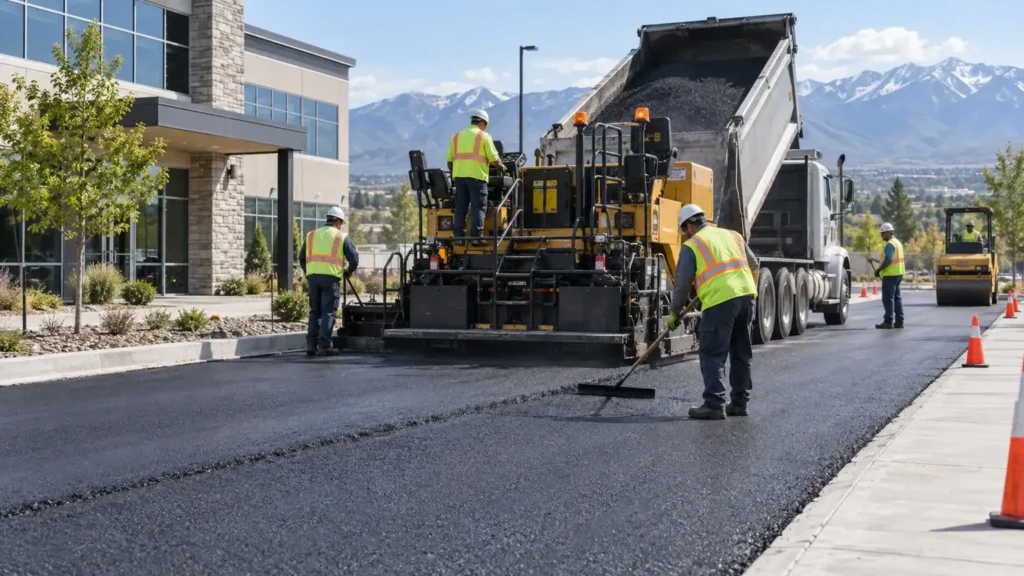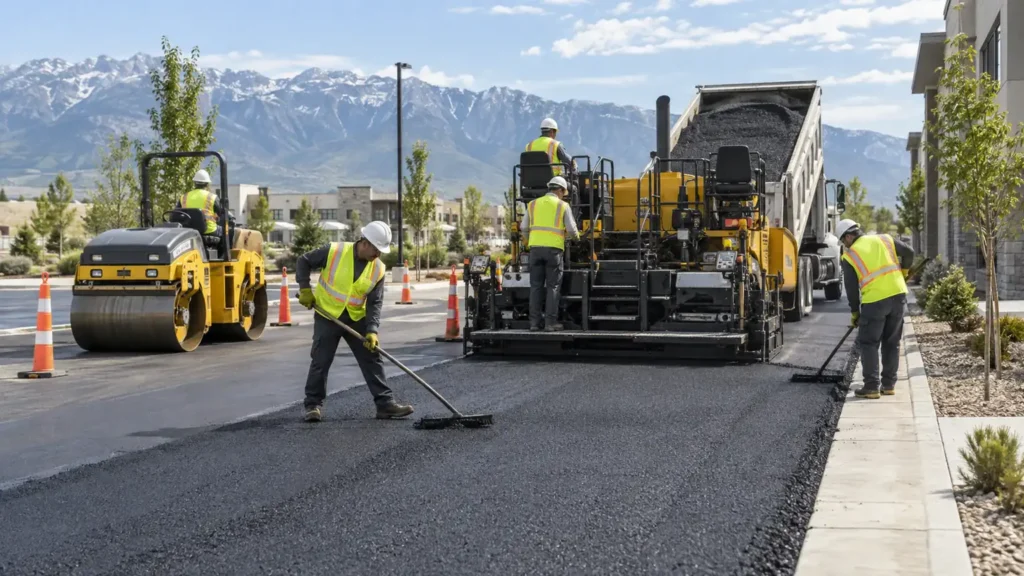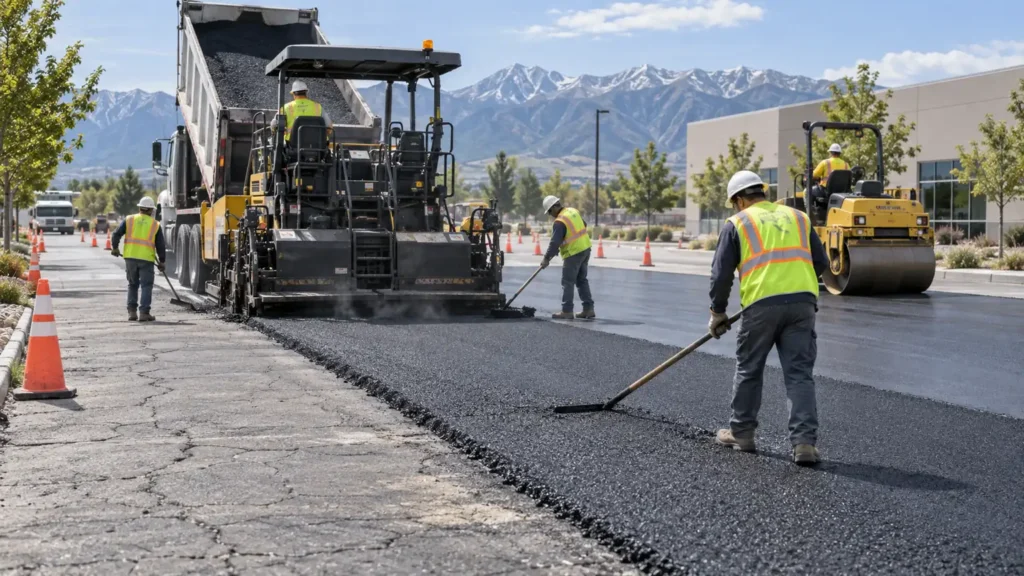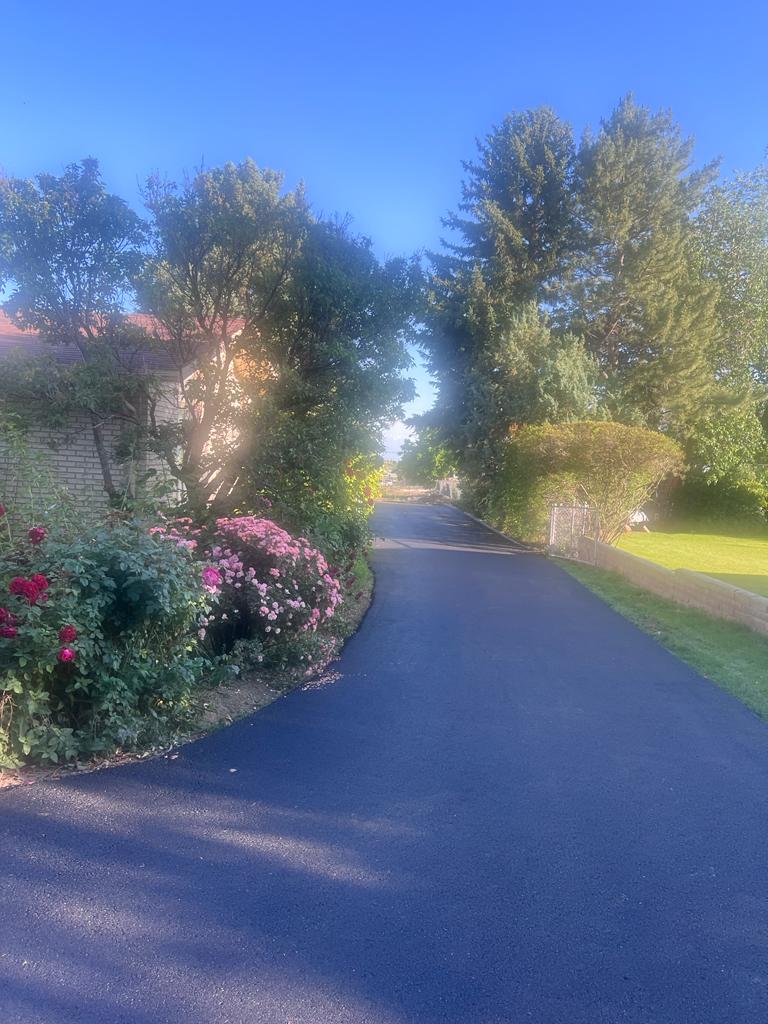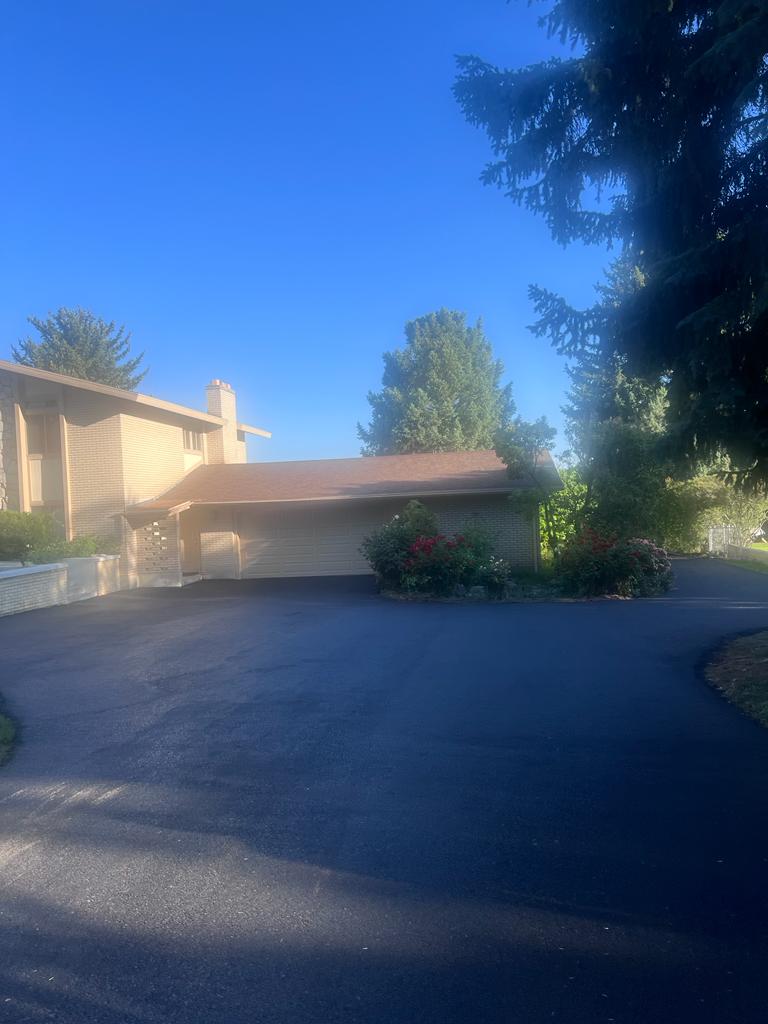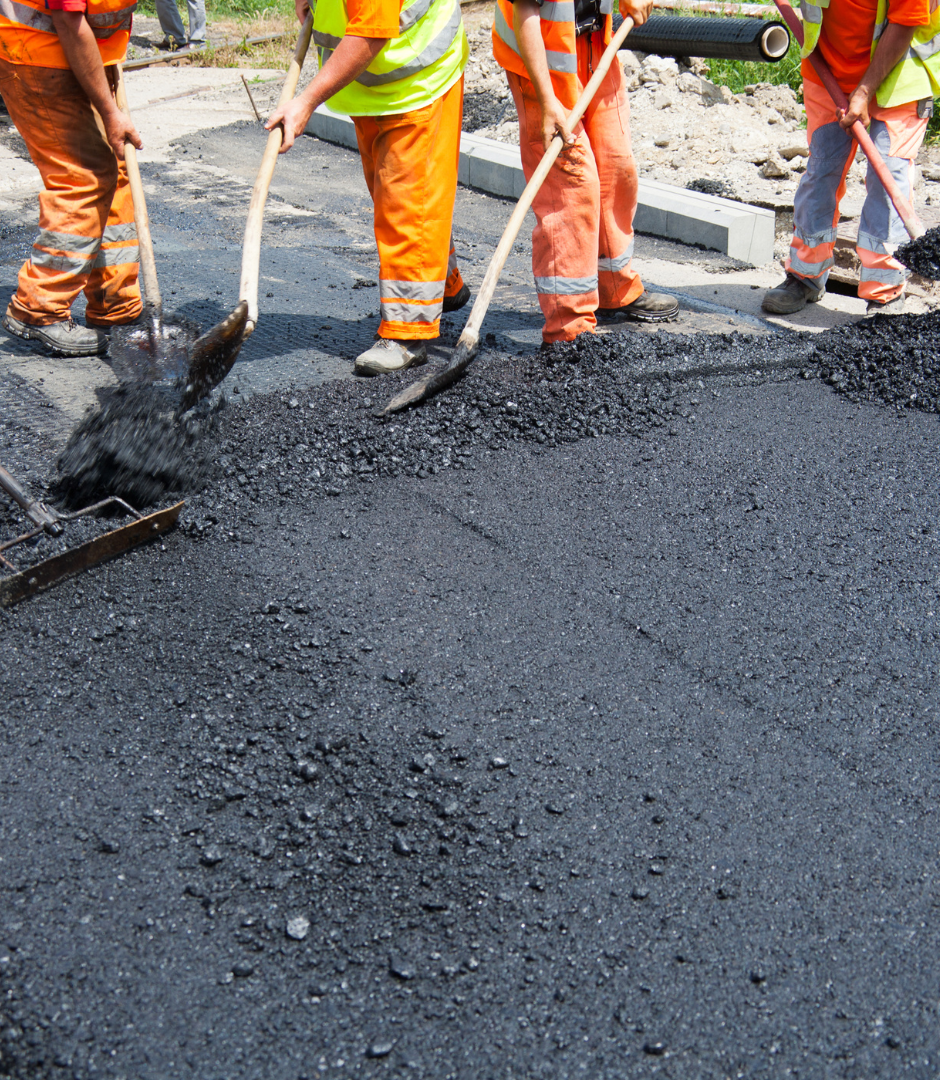
Effective asphalt repair in Spanish Fork, Utah begins by identifying why the pavement failed. A shallow pothole caused by surface deterioration needs a different treatment than alligator cracking over weak base, settlement above a utility trench, a rutted delivery lane, or water trapped at a curb. A dark patch can hide the symptom temporarily; a durable scope removes or controls the failure mechanism.
Current Utah contractor-published planning ranges include approximately $100–$400 for many surface pothole patches, $3–$7 per square foot for depressed-area repairs, and $6–$12 per square foot for many full-depth repairs. Crack-treatment examples are commonly listed around $1–$3 per linear foot. Mobilization, patch depth, base correction, traffic control, hot-mix availability, access, and quantity can materially change a quote. These are planning references—not independent averages, guaranteed rates, or an 801 Asphalt price list.
801 Asphalt provides a detailed, scope-matched quote and aims to stay competitive for comparable Utah work. A useful comparison maps each repair, names the method and depth, identifies base and drainage work, and separates temporary stabilization from permanent repair.
Quick navigation
- Best properties and repair uses
- What Spanish Fork conditions can reveal
- Choosing the correct repair
- High-quality procedure
- 2026 Utah prices
- Three niche questions
- Proposal checklist
Who needs professional asphalt repair in Spanish Fork?
Planned commercial pavement repair or driveway repair is often appropriate for:
- Campus-adjacent rental housing and established offices addressing utility-cut settlement, snowplow damage, move-in traffic, and occupied-lot phasing.
- Retail and restaurant properties repairing entrances, drive-through lanes, waste routes, potholes, and pedestrian crossing areas before paint or sealcoat work.
- Apartments, HOAs, and townhome communities prioritizing private streets, parking courts, drainage depressions, and access around residents.
- Schools, churches, and recreation properties scheduling parking lot repair during low-use periods while protecting bus routes and emergency access.
- Warehouses and service facilities separating truck-lane reconstruction from lighter passenger-area repairs.
- Homeowners correcting localized driveway failures, broken edges, settlement at garage or sidewalk transitions, and damage near drainage paths.
Repair is not automatically the best investment when distress covers most of the pavement. Widespread fatigue cracking, broad rutting, repeated patch failure, or extensive elevation problems may make reconstruction or a designed rehabilitation plan more rational. Conversely, sound pavement with only narrow nonworking cracks may need crack treatment rather than excavation.
Spanish Fork repair patterns: truck turning, irrigation, and trench movement
Damage in Spanish Fork can reflect very different loading and moisture conditions. Industrial yards and agricultural businesses may show rutting or broken edges where trucks turn, trailers stand, or equipment leaves the paved section. Residential and school sites may develop settlement along utility or pressurized-irrigation trenches. Retail lots can fail at delivery lanes, dumpster approaches, and low areas that collect runoff.
A condition map should connect cracks and depressions to those causes. Straight settlement along a trench, crescent cracking at a turn, pumping fines after rain, or recurring breakup beside an inlet each points toward a different scope. Repairing only the darkest visible opening can leave failed support outside the cut.
Spanish Fork's development guidance emphasizes soils, groundwater, drainage, and grades that avoid standing water. Its Engineering Division states that qualifying public development inspections include subbase and asphalt and that materials testing is required. Public or right-of-way work must follow current permits and standards; private owners should still require measurable repair depth, corrected support, compacted lifts, sound joints, and documented reopening.
Stormwater protection is part of the repair method. Spanish Fork identifies non-stormwater discharges as a concern and requires local drainage systems to follow city standards. Saw slurry, loose aggregate, broken asphalt, tack, fuel, and cleanup water should be collected away from inlets, irrigation paths, and drainage channels.
Match the method to the failure
Crack treatment
Timely asphalt crack repair can limit water entry where cracks are suitable for cleaning and sealing. It does not reconnect a pavement section shattered by alligator cracking, restore missing base, or correct a depression. Crack width, movement, contamination, moisture, and surrounding condition determine whether routing or sealing is appropriate.
Surface pothole patch
A surface patch can stabilize a shallow, localized defect when the surrounding pavement and support remain useful. The cavity should be cleaned and squared as appropriate, loose material removed, bond treatment used where specified, hot mix placed at workable temperature, and the patch compacted. A thin skin across loose edges is not the same scope.
Full-depth asphalt patching
Full-depth asphalt patching removes failed asphalt to firm boundaries, evaluates the exposed support, replaces unsuitable material, rebuilds aggregate base, and installs compacted hot mix. It is commonly considered for fatigue cracking, deep potholes, pumping, edge collapse, utility settlement, or repeated patch failure. The patch must extend beyond visibly broken material when failure continues under adjacent pavement.
Depressed-area correction
A low area may require removal and grade correction rather than merely adding asphalt into the bowl. The finished repair must maintain curb, drain, threshold, accessible-route, and adjacent pavement relationships. If the outlet is wrong or the site needs a new structure, civil design may be required.
Temporary cold-mix stabilization
Cold mix can provide short-term stabilization when weather, plant availability, safety, or urgent access prevents a permanent hot-mix repair. The owner should know whether the scope is temporary and when a permanent treatment will replace it. A temporary patch should not be represented as equivalent to designed full-depth reconstruction.
A high-quality full-depth repair procedure
1. Map defects and determine cause
Number each repair and document cracks, rutting, pumping, settlement, ponding, edge condition, patch history, utilities, and traffic. Mark whether the likely mechanism is surface aging, water, base failure, trench settlement, overload, or a combination. Use cores, test pits, proofing, or professional evaluation when the cause cannot be established visually.
2. Define repair limits and closure phases
Extend limits to competent pavement rather than tracing only the visible hole. Coordinate Spanish Fork office tenants, deliveries, customers, residents, waste pickup, and emergency access. Use cones, barricades, notices, and spotters appropriate to the lot. Protect pedestrians and maintain an approved accessible route.
3. Saw-cut and remove failed material
Cut straight boundaries where the method calls for them, using dust or slurry controls. Remove broken asphalt without undermining the retained edge. Keep debris and sediment contained and away from storm inlets. Expose enough depth to evaluate the supporting material.
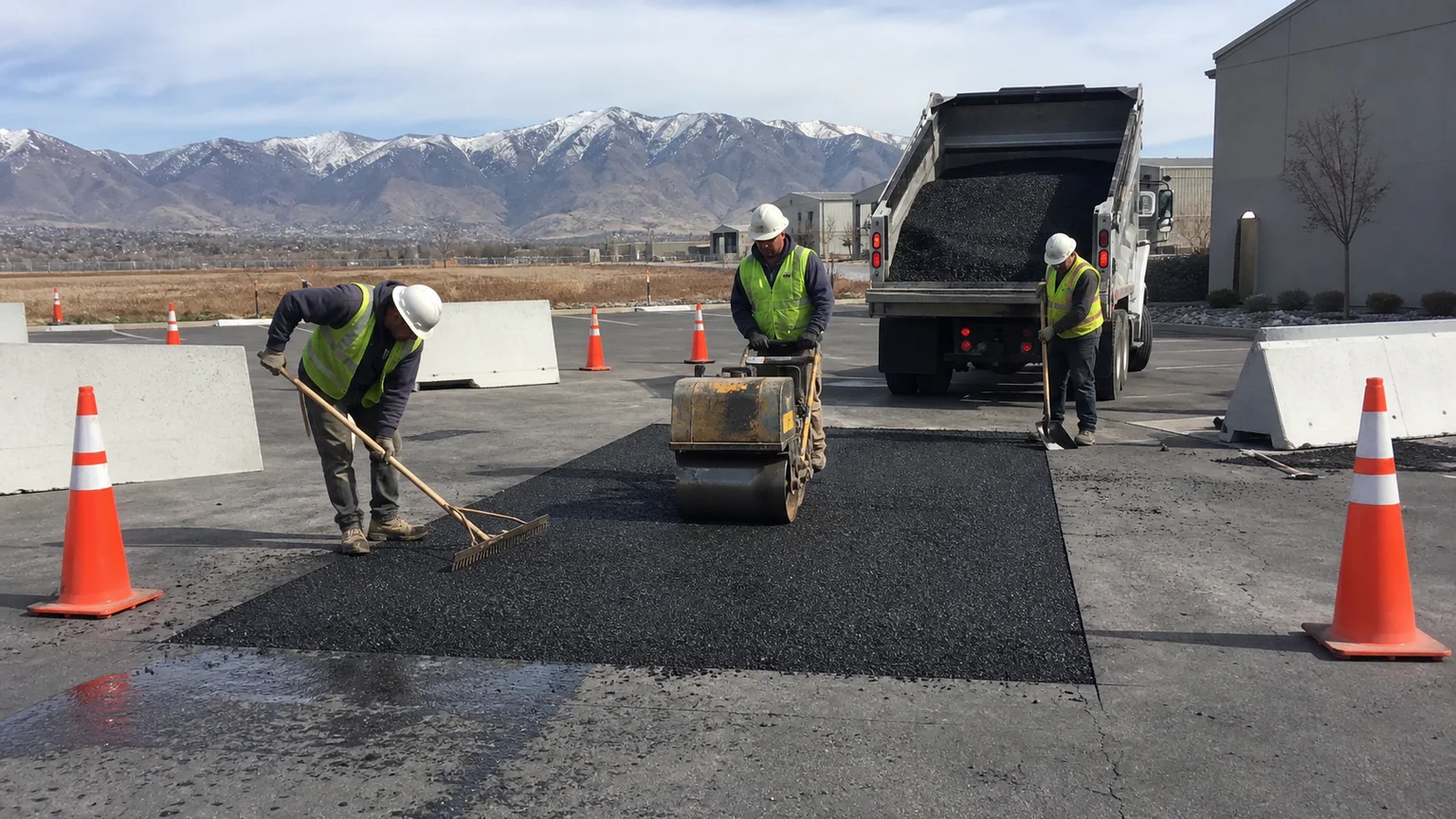
Original AI-assisted illustration of a representative full-depth repair excavation. It is not a photograph of an 801 Asphalt project.
4. Correct support and moisture problems
Remove soft, pumping, contaminated, or unsuitable material within the approved scope. Identify leaking irrigation, failed drainage, or unstable trench conditions before rebuilding. Stabilization may require aggregate, undercut, separation material, drainage work, or engineering direction depending on the cause.
5. Rebuild and compact aggregate base
Place suitable aggregate in controlled lifts, moisture-condition it as needed, and compact each lift with equipment appropriate to the excavation. Verify depth, grade, edge support, and firmness. The base should not visibly pump or move under compaction.
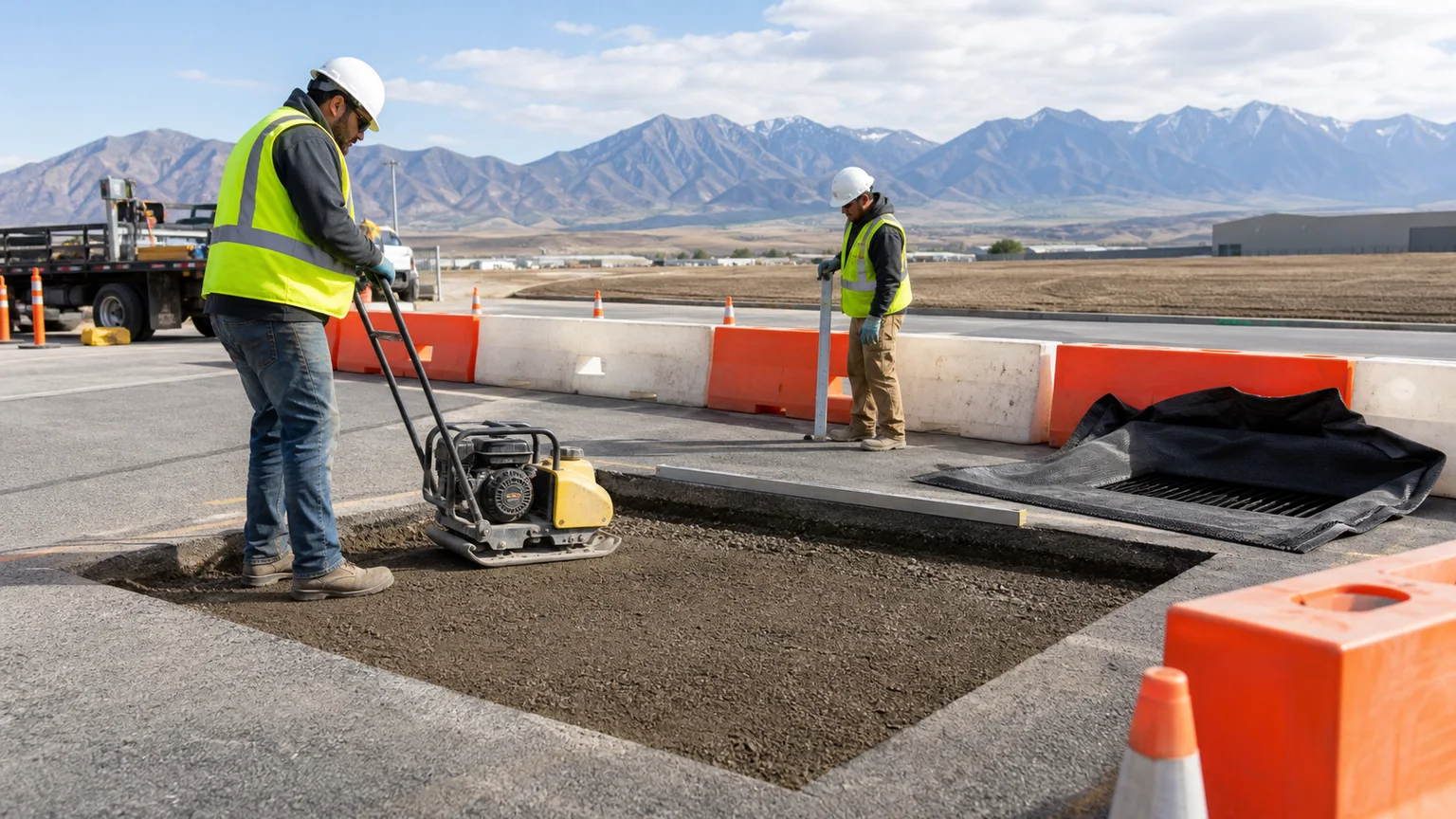
Original AI-assisted illustration of representative aggregate-base compaction in a repair excavation. It is not a photograph of an 801 Asphalt project.
6. Prepare edges and place hot mix
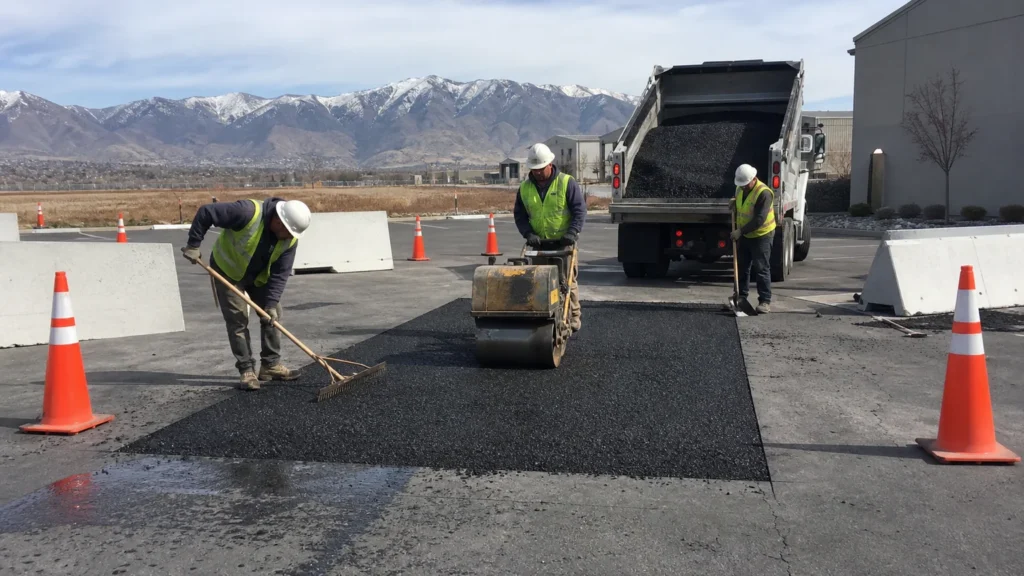
Clean vertical faces and apply tack or bond treatment where specified. Place the selected hot mix asphalt patch in lifts that can be compacted effectively. Material temperature, lift depth, excavation size, air conditions, and access all influence the workability window.
7. Compact from boundaries inward
Use suitable compactors and a planned sequence to achieve density without crushing weak retained edges. Pay attention to corners, joints, utility structures, and the center. Finish the patch at the intended elevation—neither a water-holding depression nor a raised bump that creates plow and vehicle impact.
8. Inspect and document before reopening
Check joint tightness, surface texture, grade, drainage, smoothness, edge condition, cleanliness, and compaction records required by the contract. Keep vehicles off until the repair can support them. Closeout should identify repair numbers, dimensions, depth, materials, base work, weather, excluded conditions, and temporary-versus-permanent status.
2026 asphalt repair costs in Spanish Fork
The following Utah contractor-published examples were checked August 25, 2026. They are budgeting references, not government schedules, independent market averages, guaranteed rates, or quotes from 801 Asphalt.
| Repair scope | Published Utah planning range | Unit | Typical cost drivers | Source |
|---|---|---|---|---|
| Surface pothole patch | About $100–$400 | repair | Size, cleaning, material, mobilization | 801 Asphalt repair cost guide |
| Pothole with larger base work | About $400–$800 | repair | Excavation, aggregate, depth, hot mix | 801 Asphalt paving cost guide |
| Crack treatment | About $1–$3 | linear foot | Width, routing, cleaning, quantity | 801 Asphalt repair cost guide |
| Depressed-area patch | About $3–$7 | square foot | Removal, grade correction, base, access | 801 Asphalt repair cost guide |
| Full-depth repair | About $6–$12 | square foot | Saw-cut area, depth, base failure, lifts | 801 Asphalt repair cost guide |
| Utah asphalt repair example | About $3–$5 | square foot | Scope, patch size, existing condition | 801 Asphalt paving cost guide |
Small isolated repairs often have high unit costs because mobilization, saws, compactors, crew, traffic control, trucking, and hot-mix minimums apply. A larger coordinated repair day can spread those fixed costs. Deep excavation, saturated support, utility conflicts, night work, phased access, engineering, or repeated mobilization can increase the total.
Three Spanish Fork asphalt repair questions
When is a surface patch enough, and when must failed base be removed?
A surface patch can fit a shallow localized defect where retained pavement is stable and the cavity does not show pumping or deep movement. Remove and rebuild support when fatigue cracking, recurrent potholes, deep settlement, loose base, or moisture damage indicates pavement base failure. Diagnosis should determine depth; price alone should not.
Why do potholes or alligator cracks return after cosmetic repair?
They return when the cause remains. A thin patch can crack with moving base, water can re-enter unsealed joints, utility fill can continue settling, and heavy turning can exceed the repaired section. Covering alligator cracking with a surface material leaves the fractured structure in place. A recurring failure should trigger investigation rather than another identical treatment.
How should a Spanish Fork property manager prioritize repairs before winter?
Address hazards, active water entry, deep potholes, broken edges, trip or vehicle conflicts, and failures on emergency, delivery, or accessible routes first. Then group structural repairs and crack work into efficient mobilizations. Do not seal cracks that are wet, dirty, or surrounded by failed pavement. Document temporary winter stabilization separately from permanent warm-weather work.
Quality checklist for a Spanish Fork repair proposal
Use this list when comparing pothole repair or broader work on Asphalt in Utah:
- Is every repair mapped, measured, and assigned a method?
- Does the scope distinguish surface damage from structural failure?
- Are saw-cut dimensions, excavation depth, disposal, and retained-edge condition described?
- Is unsuitable base removal and replacement quantified or governed by a clear unit price?
- Are aggregate type, lift thickness, moisture conditioning, and compaction addressed?
- Are mix, asphalt lift depth, tack, joints, and compacted thickness identified?
- Are drainage, irrigation, trench settlement, utility lids, and runoff controls included?
- Are closures, tenant notices, pedestrians, accessible routes, and deliveries planned?
- Are hot-mix availability, weather limits, and temporary repairs disclosed?
- Are finish grade, joint density, smoothness, and reopening checks documented?
- Are mobilization, taxes, testing, exclusions, and change-order triggers clear?
- Does the bidder explain which areas may need reconstruction instead of repeated patching?
Repair the mechanism, not only the opening
Walk the property after dry weather and again after runoff or snowmelt if possible. Map defects, traffic, utilities, and drainage. Ask bidders to use the same numbered repair plan and to state depth, base treatment, and temporary-versus-permanent status. Comparable scopes make price comparisons useful.
Learn about 801 Asphalt's asphalt repair service, browse the Spanish Fork article hub, and review the related guides for Spanish Fork asphalt paving and base design and Eagle Mountain full-depth repair practices.
Request a free project assessment or call (801) 277-4258. Ask for mapped quantities, repair depth, base work, drainage, traffic control, materials, quality checks, and exclusions so competing quotes address equivalent work.
Editorial disclosure
Author: 801 Asphalt Editorial Team
Technical review: Automated source, pricing, link, and claims validation completed August 25, 2026; no unverified local project claim was included.
Published and updated: August 25, 2026
AI assistance: AI assisted with drafting and the two original illustrations. The images are representative scenes, not photographs of 801 Asphalt projects.
Sources and review notes
- Spanish Fork development application requirements
- Spanish Fork Engineering inspections and materials testing
- Spanish Fork stormwater program
- 801 Asphalt repair cost guide
- 801 Asphalt paving cost guide
Sources and prices checked August 25, 2026. Contractor-published figures are market examples, not government schedules, independent averages, an 801 Asphalt price list, or guaranteed quotes. Applicable public or permitted work should be checked against current Spanish Fork requirements and approved plans. No unverified project-history, ranking, licensing, warranty, lowest-price, or local-experience claim is included.