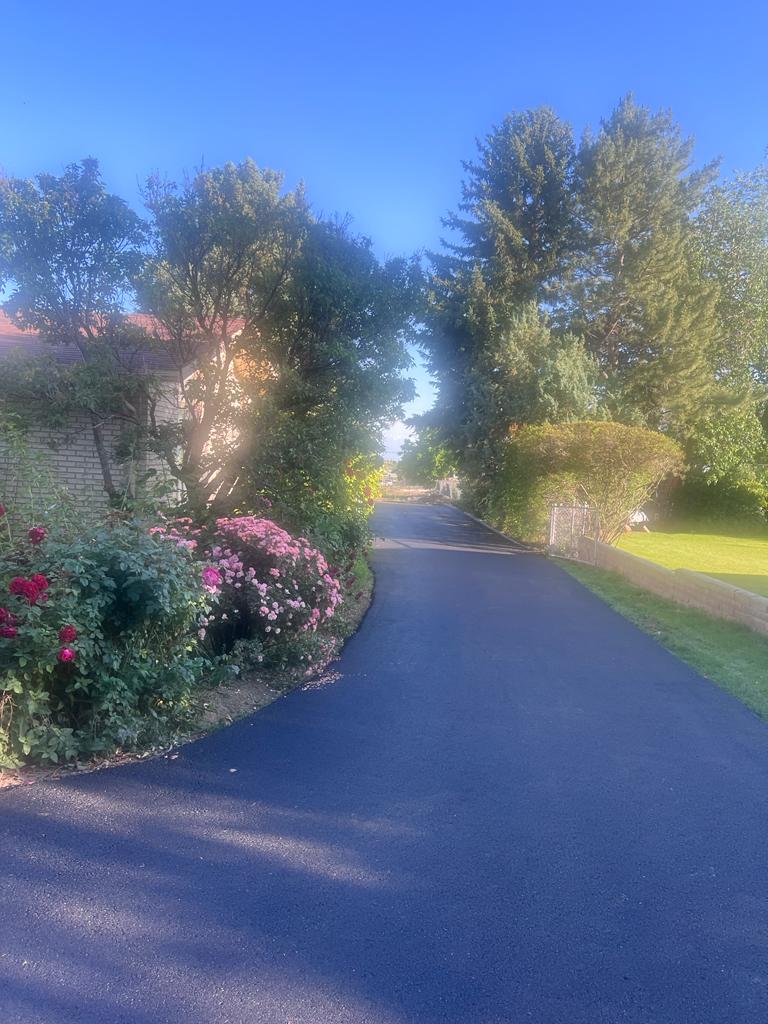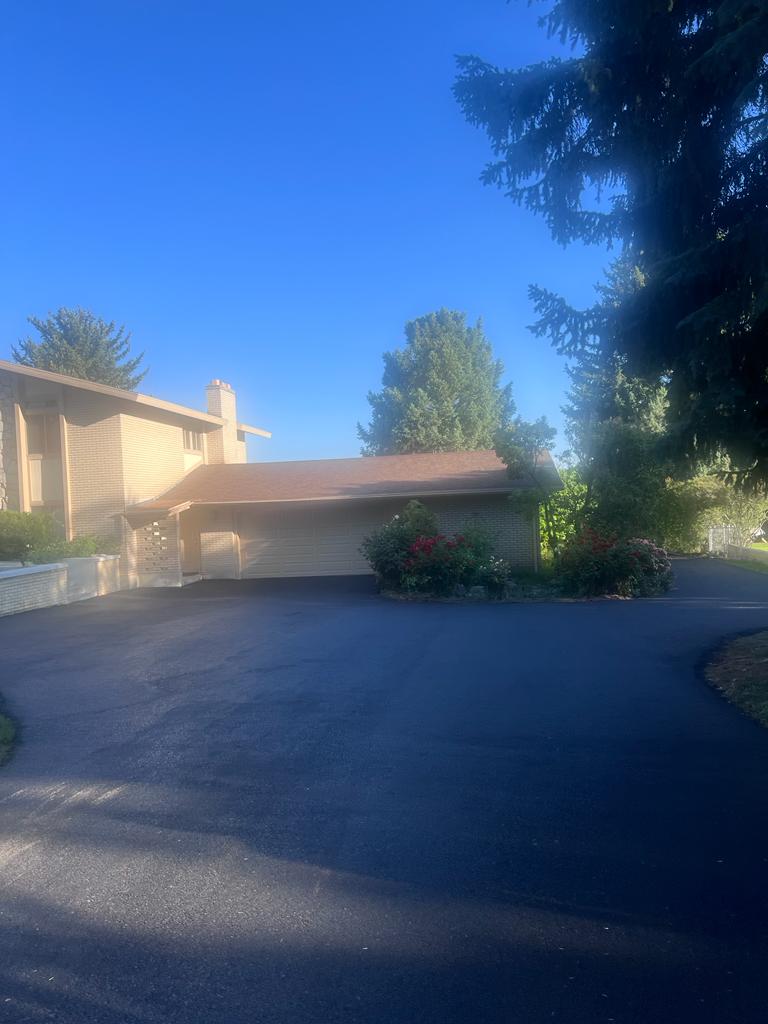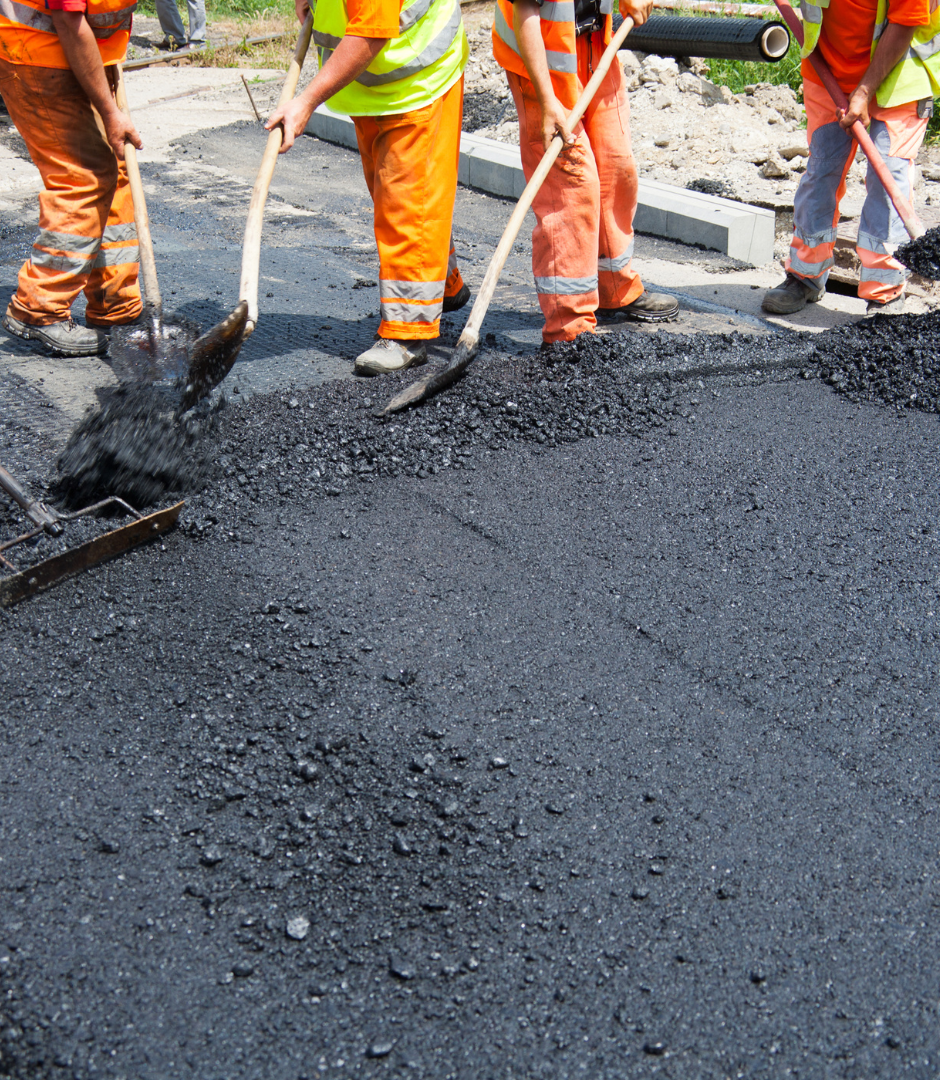
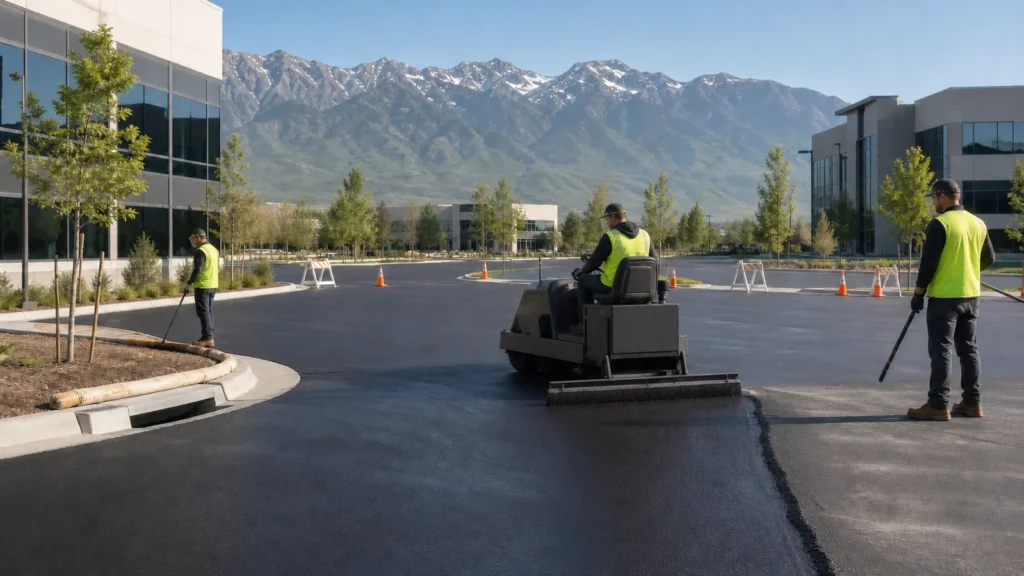
Successful asphalt sealcoating in Lehi, Utah depends on pavement condition, surface preparation, weather, product requirements, and closure control. Sealcoat is a thin maintenance coating for suitable asphalt; it is not a structural repair. Applied to a clean, dry, stable surface, it can refresh appearance and provide a sacrificial wearing layer against sunlight and routine weather exposure. Applied over moving cracks, potholes, oil, dust, or wet base failure, it can fail quickly while hiding the real problem.
Current Utah contractor-published guides place many sealcoating scopes around $0.15–$0.50 per square foot, with smaller driveways often carrying project minimums. One guide lists approximately $250–$800 or more for many driveways, while a Salt Lake-area guide lists about $1,000–$10,000 or more for commercial lots, depending on size and scope. These are planning references—not independent averages, guaranteed market rates, or an 801 Asphalt price list.
801 Asphalt provides a detailed, scope-matched quote and aims to stay competitive for comparable Utah work. Compare square footage, cleaning, repairs, crack treatment, product system, number of coats, application method, traffic control, cure time, and exclusions before comparing totals.
Quick navigation
- Best properties and unsuitable cases
- Lehi operating and runoff considerations
- Pavement acceptance test
- High-quality procedure
- 2026 Utah price ranges
- Three niche questions
- Proposal checklist
Where sealcoating fits in Lehi
Planned commercial sealcoating or driveway sealcoating can make sense for:
- Technology campuses and office parks with structurally sound parking rows that can be closed in phases around tenants, visitors, and deliveries.
- Retail, restaurant, medical, and service properties coordinating parking lot maintenance after patching and before restriping.
- Apartments, HOAs, and townhome communities that can communicate phased closures, towing rules, waste pickup, resident access, and cure periods.
- Schools, churches, and recreation facilities with long low-use windows and a sound pavement surface.
- Warehouses where passenger areas are suitable but truck routes, loading pads, and turning zones receive separate structural evaluation.
- Homeowners whose asphalt driveway is stable, cured, cleanable, and free of widespread fatigue cracking or base movement.
Sealcoat is a poor fit for gravel, concrete, saturated pavement, loose or severely raveled asphalt, active oil contamination, and surfaces with widespread alligator cracking. It will not raise a depression, restore missing base, fill a pothole correctly, or repair a failed utility trench. A property with broad structural distress should price repair or rehabilitation before cosmetic coating.
Lehi conditions: office phasing, dust, and stormwater
Lehi's office campuses, retail centers, apartments, schools, and active development sites create closure and contamination challenges. A technically good coating can be damaged by early tenant traffic, delivery vehicles crossing a wet phase, irrigation overspray, landscaping debris, or windblown construction dust. The work plan should control those risks explicitly rather than relying on cones alone.
Phasing deserves special attention. Every phase creates edges, additional mobilization, temporary circulation, and possible tracking. A map should show which entrance, accessible route, delivery area, waste enclosure, and parking supply remains usable. Reopening should follow actual coating and weather conditions, not a calendar assumption made before work starts.
Lehi's Storm Water program aims to limit pollutant discharges from the municipal storm-drain system. Cleaning debris, loose aggregate, crack-treatment residue, coating material, and wash water should therefore be contained. Inlets, curb openings, concrete, landscaping, and adjacent vehicles need protection before material is moved or applied.
Sun and elevation also influence asphalt oxidation and UV pavement damage. Sealcoat can serve as a sacrificial surface on accepted pavement, but it is only one part of Utah pavement maintenance. Drainage, timely crack treatment, patching, snow operations, cleaning, and traffic management remain necessary.
Inspect before choosing a coating
Start with a condition map. Identify narrow cracks, wide cracks, failed sealant, potholes, raveling, oil, settlement, ponding, utility cuts, alligator patterns, worn edges, and prior coatings. Note whether distress is isolated or widespread and whether it changes after runoff or heavy vehicles.
Cracks suitable for crack sealing are cleaned and treated with a compatible material before coating, following cure and manufacturer requirements. Crack filler is not a substitute for removing failed base. Potholes and structural patches should be completed and allowed to stabilize before sealcoat.
New asphalt needs time to cure before its first coating. Current contractor guidance varies: one Utah source advises waiting approximately six to twelve months, while other contractors publish different windows based on mix, weather, surface condition, and product. The correct decision should follow the paving and coating specifications plus a field evaluation. Coating very fresh asphalt can interfere with oxidation and bonding.
Existing coatings also matter. A surface with many thick, brittle layers can crack, flake, or lose texture. The proposal should identify loose material removal and explain whether another coat is compatible. A darker surface is not automatically a healthier surface.
A high-quality Lehi sealcoating procedure
1. Measure, map, and schedule the property
Confirm net asphalt area after islands, concrete, buildings, and excluded zones. Map cracks, repairs, oil, drains, curbs, signs, utility lids, and prior coatings. Build a closure plan around office hours, residents, deliveries, waste service, emergency access, and an approved accessible route.
2. Complete structural repairs first
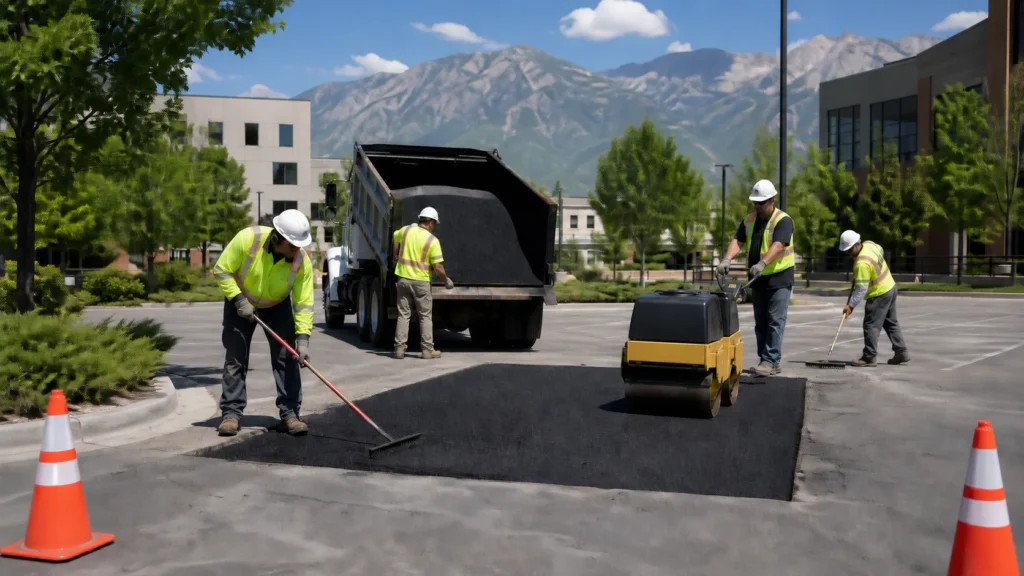
Repair potholes, failed patches, moving edges, and base problems before coating. Correct active drainage or irrigation issues. Sealcoat should not be used as black camouflage for a structural problem. Document areas excluded because they need reconstruction or a different material.
3. Treat suitable cracks and contamination
Clean cracks and use a compatible treatment at the specified dimensions. Allow it to cure as required. Address oil or chemical contamination with the product system's approved method; heavily contaminated pavement may remain unsuitable. Confirm compatibility between old coatings, crack materials, patches, and new sealer.
4. Clean the entire surface and protect inlets
Remove dirt, sand, vegetation, loose aggregate, failed coating, and deicing residue. Lehi construction and landscaping activity can return fine dust to a previously cleaned lot, so inspect immediately before application. Protect storm inlets, curb openings, concrete, landscaping, walls, vehicles, and utility hardware.
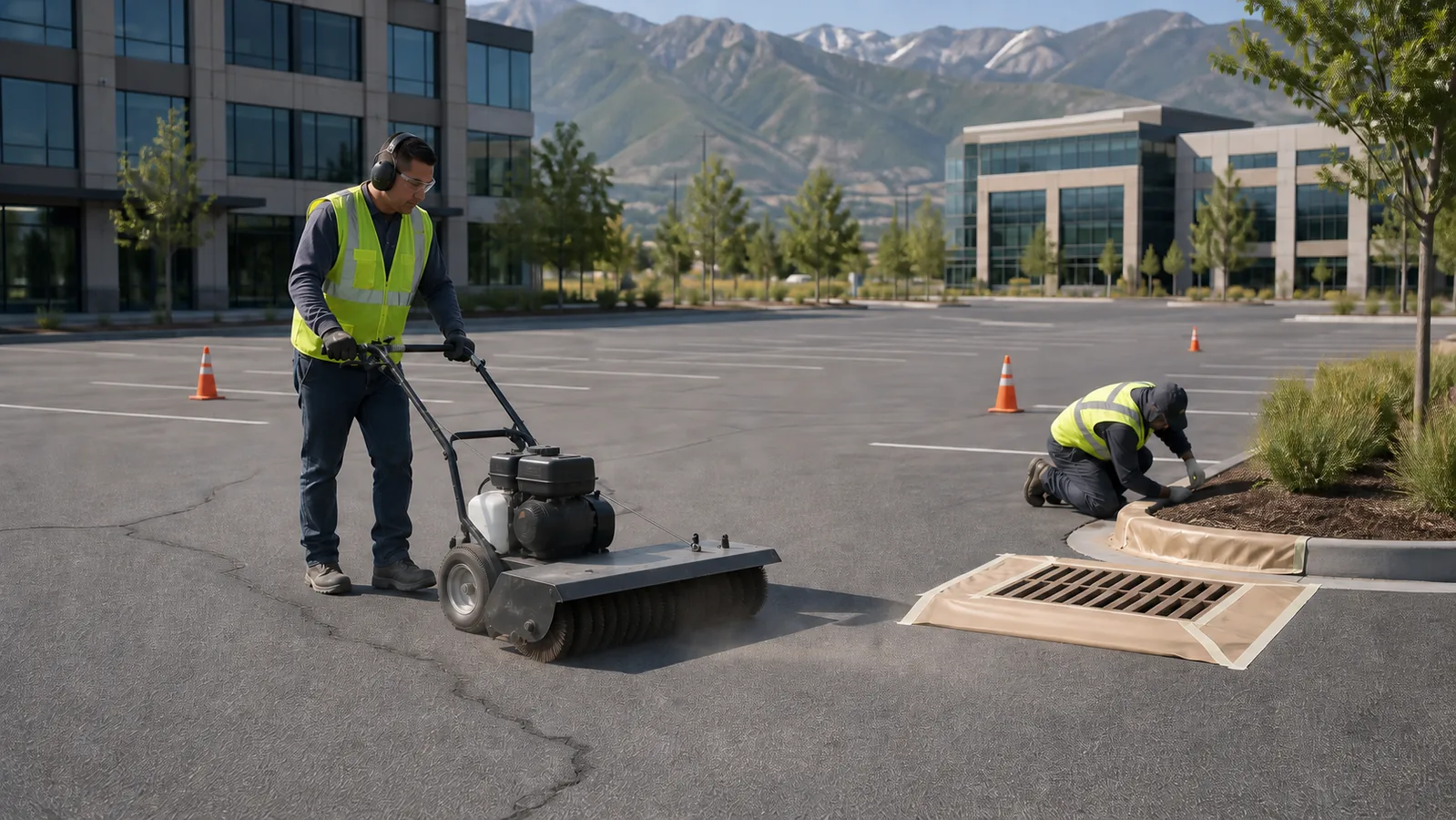
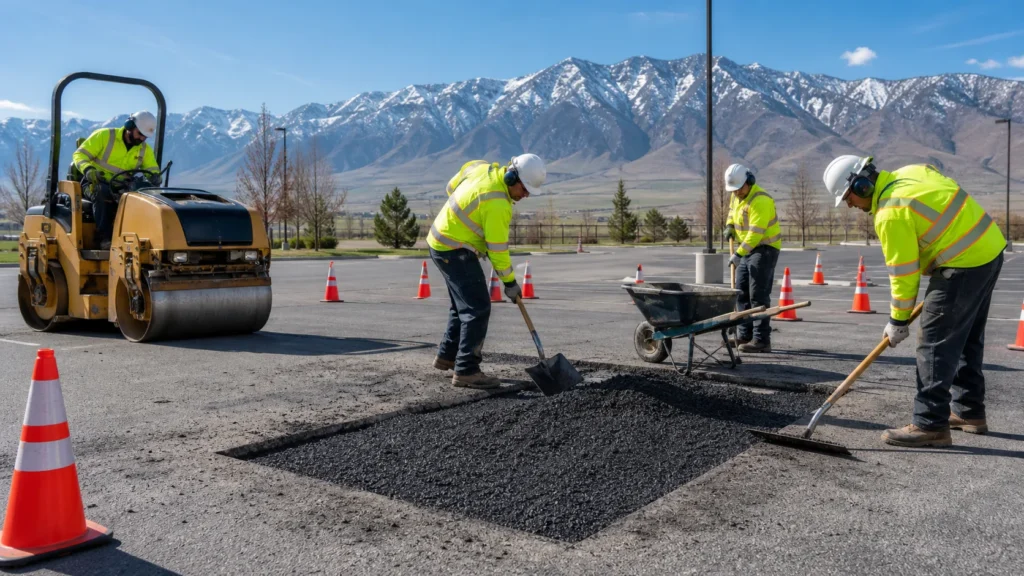
Original AI-assisted illustration of representative surface cleaning and inlet protection. It is not a photograph of an 801 Asphalt project.
5. Verify weather and pavement dryness
Check air and pavement temperature, forecast, wind, humidity, shade, and expected overnight conditions against the manufacturer's requirements. A current Utah guide advises a dry surface and temperatures above 50°F, but the selected product's instructions control. Avoid rain, irrigation, dew, or strong wind that can affect curing and application.
6. Mix and apply the specified system
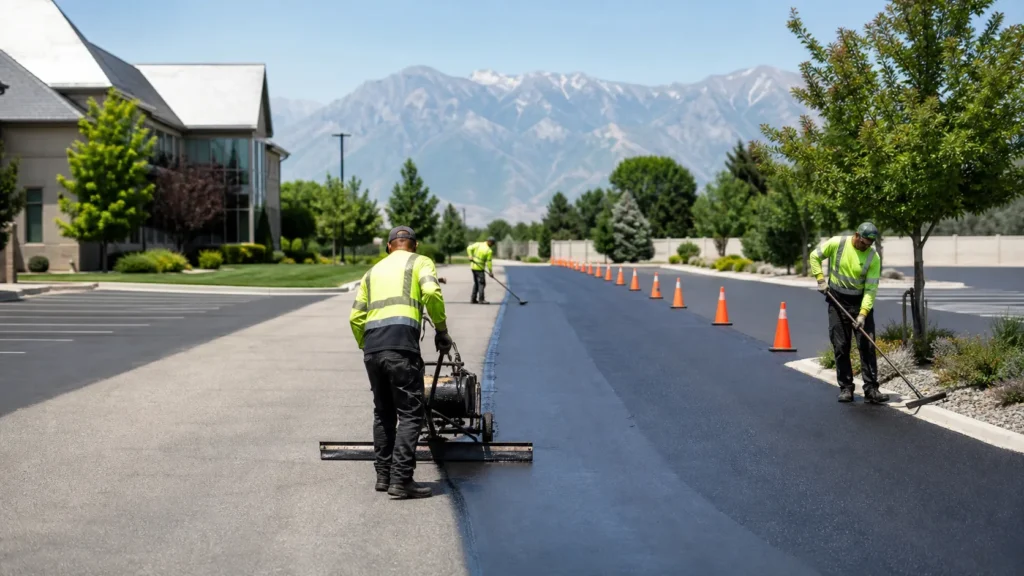
Follow manufacturer requirements for mixing, dilution, additives, coverage, and application. Use squeegee, spray, or a combination only where the product and scope support it. Apply neat edges without contaminating concrete or inlets. Avoid thick puddles, ridges, and thin skipped zones.
7. Use two controlled coats when specified
A two-coat sealcoat should be two deliberate applications, not one heavy layer called two coats. Allow the first coat to dry sufficiently, inspect coverage, then apply the second in the planned direction. Coat count, application rate, and sequence should be written so bidders price the same system.
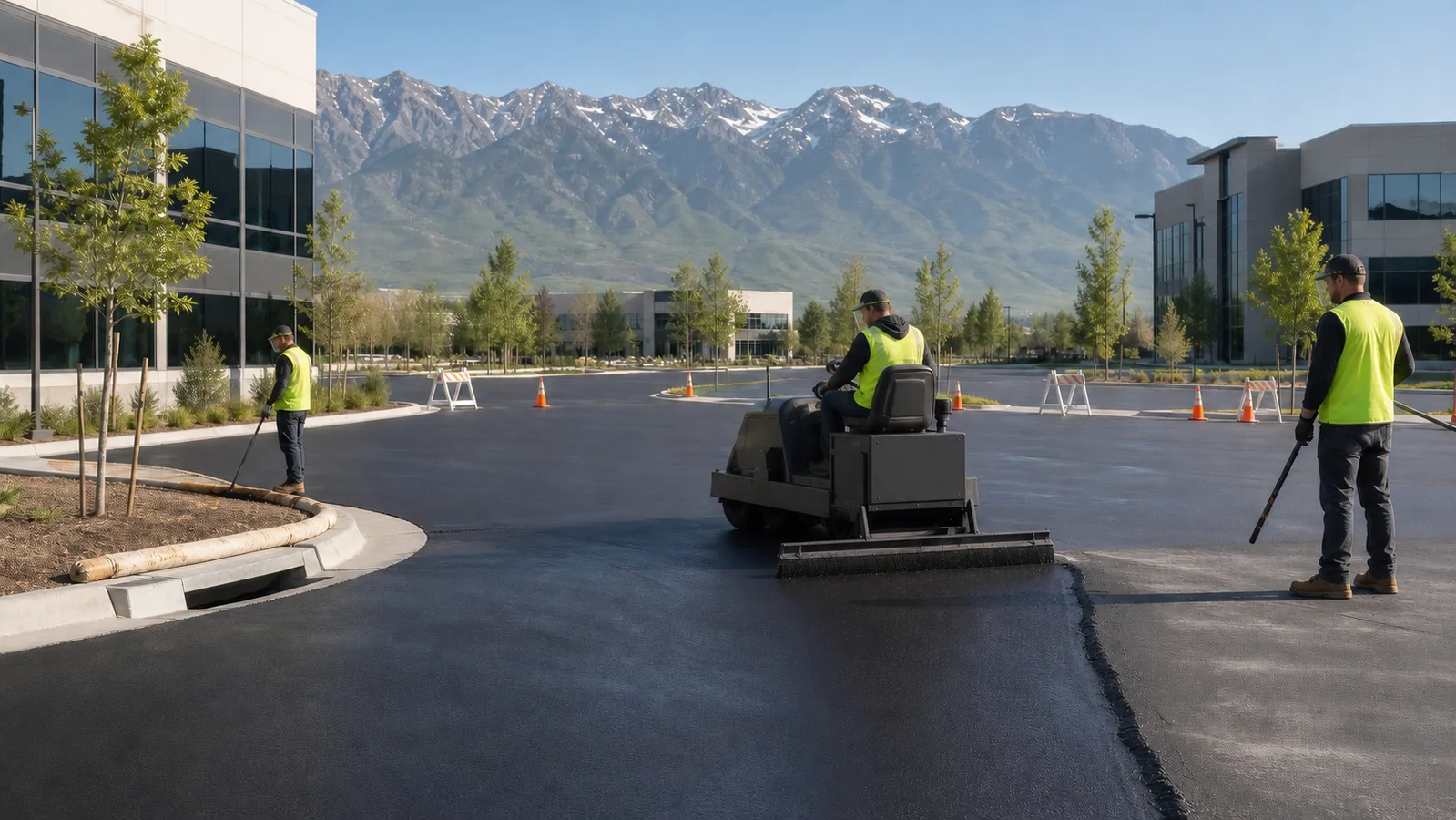
Original AI-assisted illustration of a representative controlled sealcoat application. It is not a photograph of an 801 Asphalt project.
8. Inspect, cure, stripe, and reopen
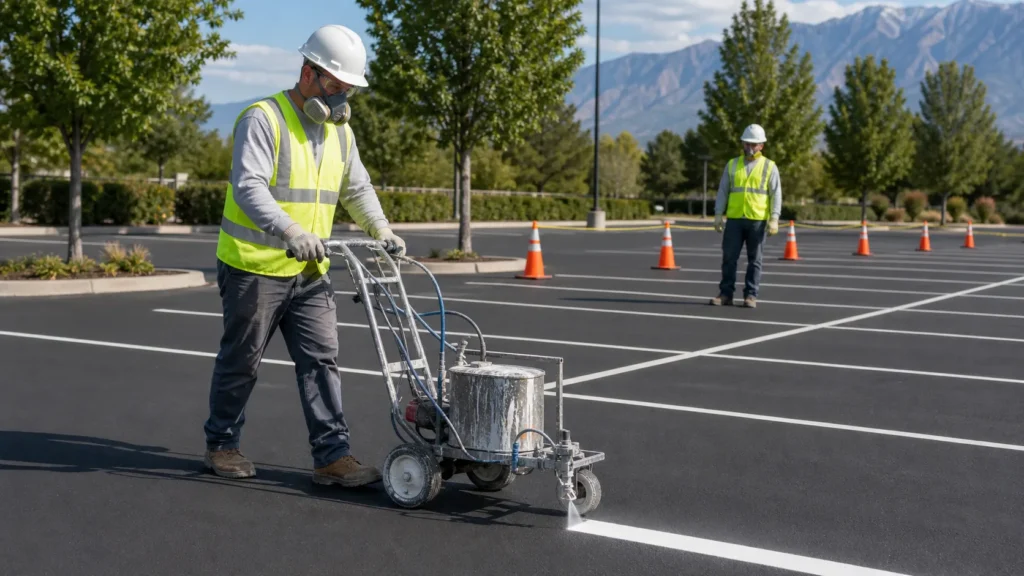
Check coverage, texture, ridges, puddles, thin areas, overspray, protected features, and phase edges. Keep pedestrians and vehicles off for the product- and weather-specific cure period. A Utah guide lists approximately 24–48 hours before vehicle traffic as a planning example, but conditions can extend it. Stripe only after the coating is ready and reopen by documented phase.
2026 sealcoating costs in Lehi
The following contractor-published planning ranges were checked August 25, 2026. They are not government rates, independent averages, guaranteed prices, or quotes from 801 Asphalt.
| Sealcoating scope | Published Utah planning range | Unit | Typical price drivers | Source |
|---|---|---|---|---|
| Commercial sealcoating | About $0.15–$0.35 | square foot | Size, cleaning, coats, traffic control | Eckles Paving Utah sealcoat guide |
| Driveway project example | About $250–$800+ | project | Minimum, area, cracks, access, coats | Eckles Paving Utah sealcoat guide |
| Salt Lake-area sealcoating | About $0.15–$0.35 | square foot | Preparation, cracks, property type | Eckles Paving Salt Lake cost guide |
| Commercial lot example | About $1,000–$10,000+ | project | Net area, repairs, phasing, striping | Eckles Paving Salt Lake cost guide |
| Wasatch Front planning range | About $0.20–$0.50 | square foot | Condition, preparation, coats, access | Asphalt Utah sealcoating guide |
The sealcoating cost per square foot can be misleading when scope differs. One quote may exclude crack treatment, patching, oil treatment, sweeping, traffic control, and restriping. Another may include two coats and multiple phases. Small areas can carry higher unit prices because mobilization and setup remain. Ask for net area and separately identified repair quantities.
Three Lehi sealcoating questions
When is pavement too damaged for sealcoating to help?
Pavement is usually a poor candidate when it has widespread alligator cracking, loose aggregate, deep potholes, pumping base, saturated areas, broad settlement, or recurring structural patches. Sealcoat cannot bridge movement or rebuild support. Repair or rehabilitation should be evaluated before coating.
How long should new asphalt cure before its first sealcoat in Utah?
One current Utah guide recommends approximately six to twelve months, but published contractor guidance varies. Mix, season, weather, surface condition, and product matter. Use the paving and sealcoat specifications plus a field acceptance check rather than selecting a date from a generic rule.
What preparation and weather window produce a durable finish?
The accepted surface should be stable, clean, dry, and free of loose material and incompatible contamination. Repairs and crack treatments should be complete and cured. Air and pavement temperatures, forecast, wind, shade, irrigation, humidity, and overnight conditions must satisfy the selected product. Good freeze-thaw protection still depends primarily on sound drainage, sealed suitable cracks, stable pavement, and timely repair; sealcoat alone does not prevent structural winter damage.
Quality checklist for a Lehi sealcoating proposal
When comparing work on Asphalt in Utah, confirm:
- Net asphalt area and excluded zones are measured.
- Pavement is accepted as a coating candidate, with failed areas mapped separately.
- Crack, patch, oil, raveling, ponding, and prior coating conditions are documented.
- Cleaning methods and same-day dust reinspection are included.
- Storm inlets, curb openings, concrete, buildings, vehicles, and landscaping are protected.
- Product, dilution, additives, coverage rate, application method, and coat count are stated.
- Weather and pavement-temperature limits follow the selected manufacturer.
- Phase boundaries, closures, notices, accessible routes, and deliveries are planned.
- Cure time and restriping sequence are linked to actual conditions.
- Coverage, texture, edges, thin spots, puddles, and overspray are inspected.
- Mobilization, minimums, repairs, striping, taxes, and exclusions are clear.
- No unsupported promise treats sealcoat as structural repair or a fixed-life guarantee.
Plan the closure as carefully as the coating
Walk the property with a condition map and operating calendar. Separate repair, crack treatment, cleaning, coating, curing, and restriping. Ask every bidder to price the same net area and number of coats. On an occupied Lehi property, a practical closure map can be the difference between a well-cured surface and tracked, prematurely reopened material.
Learn about 801 Asphalt's Utah sealcoating service, browse the Lehi article hub, and review related guidance for repairing Lehi pavement before coating and Eagle Mountain sealcoating preparation.
Request a free project assessment or call (801) 277-4258. Ask for measured area, preparation, repairs, product, coat count, weather limits, phasing, cure, striping, and exclusions so competing quotes cover equivalent work.
Editorial disclosure
Author: 801 Asphalt Editorial Team
Technical review: Automated source, pricing, link, and claims validation completed August 25, 2026; no unverified local project claim was included.
Published and updated: August 25, 2026
AI assistance: AI assisted with drafting and the two original illustrations. The images are representative scenes, not photographs of 801 Asphalt projects.
Sources and review notes
- Lehi City Storm Water resources
- Lehi City Design Standards and Public Improvement Specifications
- Eckles Paving Utah sealcoat cost guide
- Eckles Paving Salt Lake sealcoating cost guide
- Asphalt Utah 2026 sealcoating guide
- 801 Asphalt sealcoating service
Sources and prices checked August 25, 2026. Contractor-published figures are market examples, not government schedules, independent averages, an 801 Asphalt price list, or guaranteed quotes. Manufacturer instructions and current local requirements control applicable work. No unverified project-history, ranking, licensing, warranty, lowest-price, or local-experience claim is included.