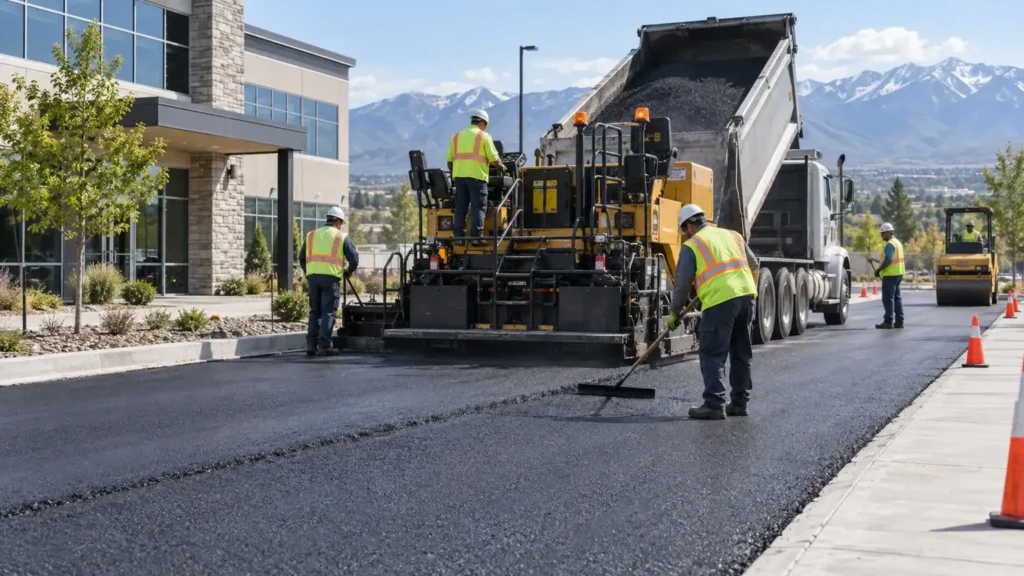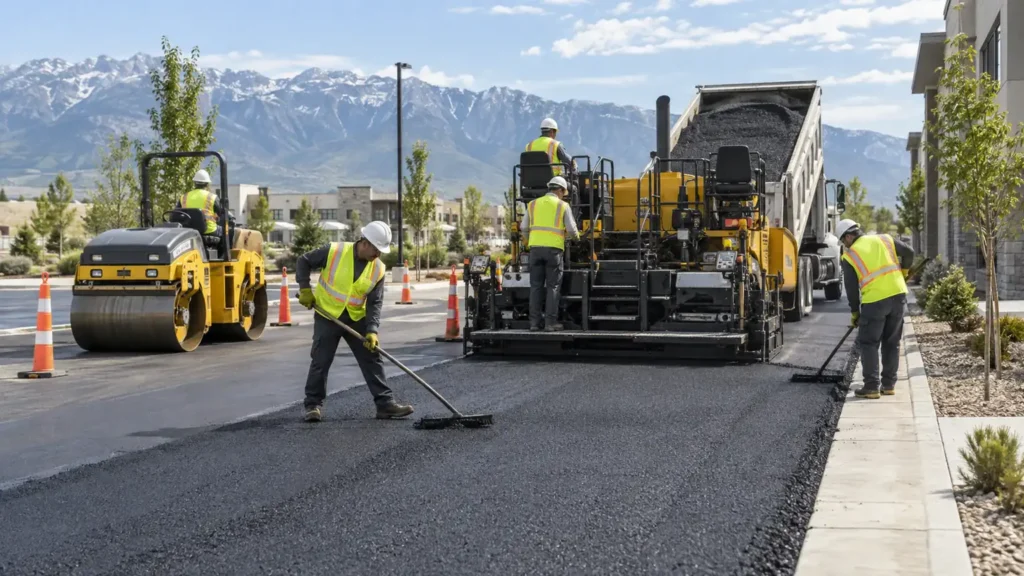
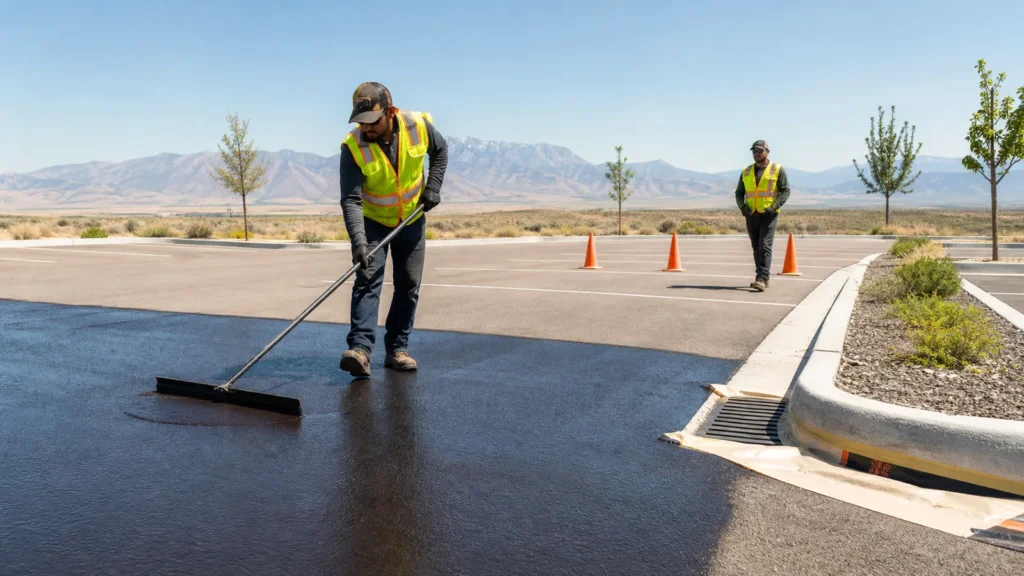
Asphalt sealcoating in Eagle Mountain, Utah is preventive maintenance for cured pavement that remains structurally sound. It creates a renewed protective surface that helps slow oxidation and exposure to ultraviolet light, water, and minor vehicle-fluid staining. It does not rebuild failed base, level a settled utility trench, fill potholes, or make alligator-cracked pavement structurally whole.
Current Utah contractor-published budgeting examples place many sealcoating projects around $0.15–$0.50 per square foot. Published driveway examples range from roughly $150 to $800 or more, while commercial totals vary widely with area and phasing. Crack treatment, cleaning, oil-spot preparation, coat count, traffic control, minimum mobilization, and restriping may be separate. These figures are planning references—not independent market averages, guaranteed rates, or an 801 Asphalt price list.
801 Asphalt provides a detailed, scope-matched quote and aims to stay competitive for comparable Utah work. Ask every bidder to state measured area, surface preparation, crack quantities, material system, coat count, application basis, curing, and exclusions so proposals price the same work.
Quick navigation
- Best property uses
- When not to sealcoat
- New asphalt cure timing
- High-quality procedure
- 2026 Utah budgeting ranges
- Three niche questions
- Proposal checklist
Why Eagle Mountain sealcoating needs site-specific preparation
Eagle Mountain includes newer subdivisions, large residential drives, HOA parking courts, schools, churches, retail sites, and commercial pads near ongoing development. Pavement on one property may be newly installed and still curing; another surface may be older but structurally sound; a third may have utility settlement or construction-access damage that needs repair before any coating is considered.
Open high-desert sites can accumulate windblown dust, fine soil, and tracked construction debris. That contamination must be removed because sealcoat adheres to the surface it touches. Blowing loose material into landscaping, streets, or storm drains is not acceptable preparation. Dust control and cleaning should leave the asphalt dry—not saturated—before coating.
In this setting, asphalt oxidation and UV pavement damage are valid surface-maintenance concerns, while crack treatment and drainage provide more direct freeze-thaw protection than coating alone. Owners comparing sealcoating cost per square foot should therefore confirm whether the quote includes the preparation that lets the material bond and whether separate crack or repair work is needed.
Runoff protection is equally important. Eagle Mountain City's Stormwater Department identifies paint, vehicle fluids, construction waste, and other non-stormwater materials as potential pollutants and explains that best-management practices help keep pollutants from leaving a site. Sealcoat is a different material from paint, but the practical control is the same: protect inlets, keep liquid material away from curb-flow paths and soil, manage spills, and do not wash residue into the storm system.
Who is sealcoating best for in Eagle Mountain?
Proper commercial sealcoating or driveway sealcoating is often a good fit for:
- Newer residential or HOA pavement that has cured adequately and is beginning a planned maintenance cycle.
- Retail and office parking lots that remain stable but have faded from sun and need phased parking lot maintenance.
- Schools, churches, and recreation facilities that can provide a clean closure window outside peak use.
- Multifamily properties that can divide work into resident-access phases and preserve alternate routes.
- Passenger-vehicle areas at warehouses or contractor sites, after truck routes and heavy-load zones receive separate evaluation.
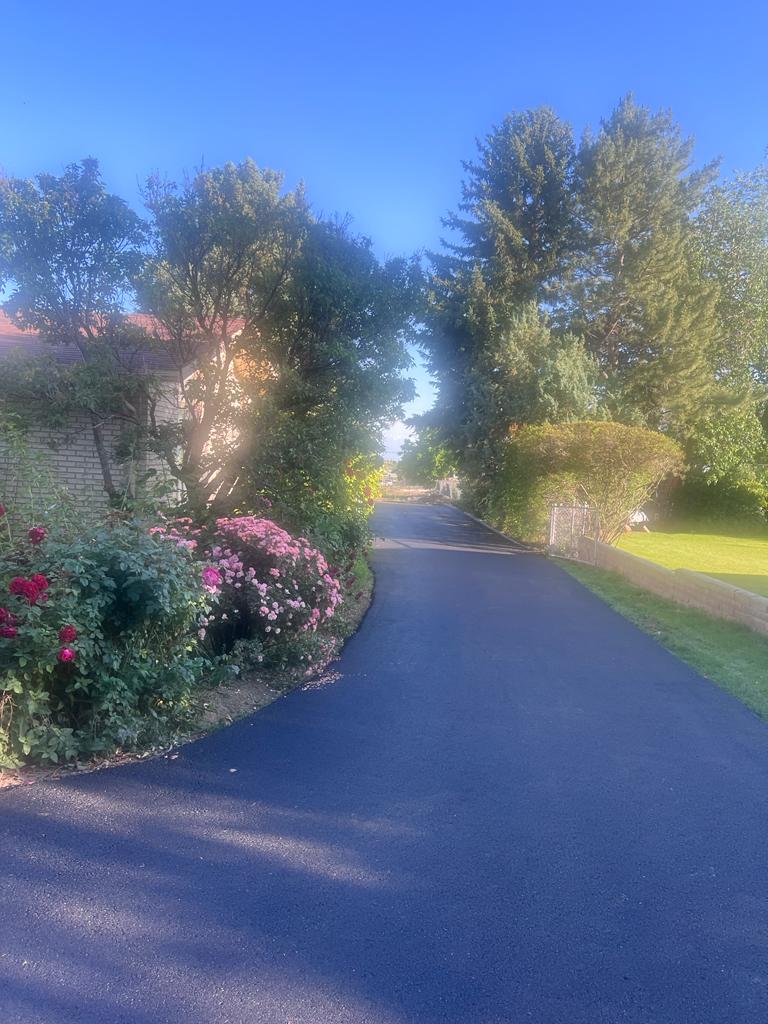
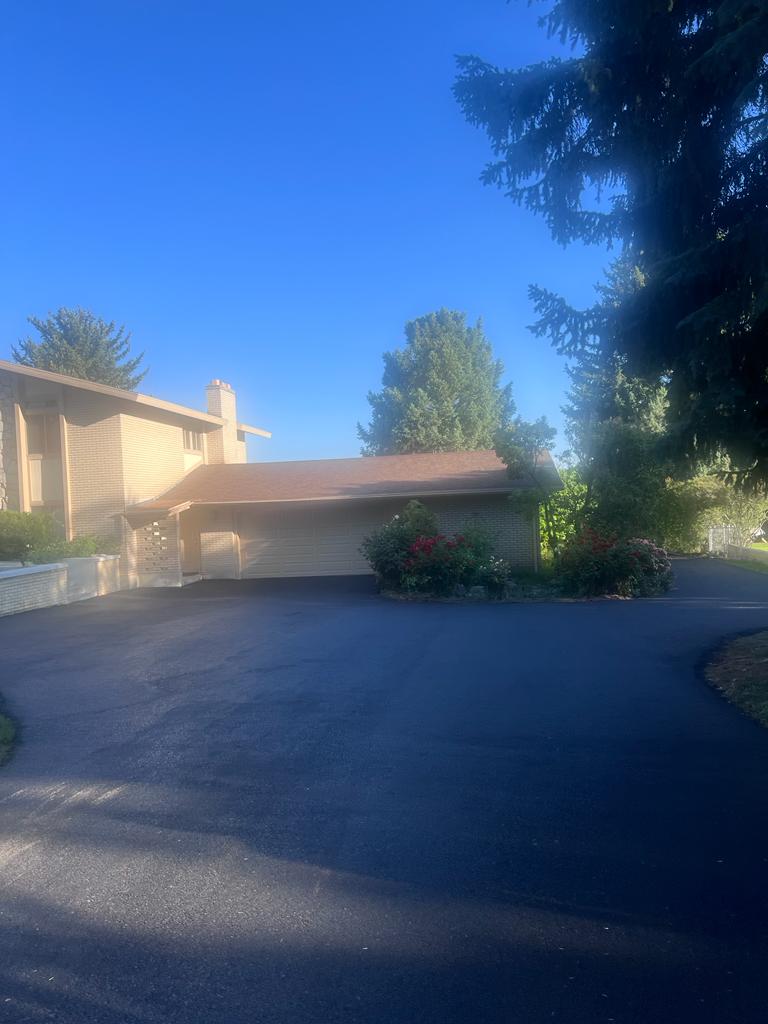
- Long driveways that are gray and mildly weathered but not soft, rutted, crumbling, or broadly cracked.
- Property managers coordinating crack treatment, sealcoat, and later striping under one written plan.
Areas with frequent fuel exposure, standing water, metal outriggers, dumpster loads, tracked aggregate, or aggressive truck turning may require repair, concrete, or a different maintenance expectation. A dark coating can improve visual consistency, but color does not prove the pavement structure is sound.
When sealcoating is the wrong treatment
Do not use sealcoat over widespread alligator cracking, potholes, pumping, deep ruts, loose aggregate, broad settlement, unstable edges, or recurring trench depressions. Those conditions commonly require repair or rehabilitation analysis. Coating may hide fine details temporarily while structural movement continues.
The treatment is also unsuitable when asphalt is too new, the surface is wet or dusty, a previous coating is peeling or incompatible, or the weather window cannot support curing. Oil and other bond-breaking contamination need appropriate treatment. Potholes and failed areas should be repaired first, and compatible crack work should cure before coating.
Sealcoat cannot correct grade, blocked drainage, a low utility lid, an irrigation leak, a broken shoulder, or elevation conflict at concrete. If a defect affects a public connection, right-of-way, or storm system, coordinate the underlying work with Eagle Mountain City. When failure covers most of a property, compare overlay or reconstruction rather than repeatedly coating a surface that has passed the maintenance stage.
Newer pavement cure and first sealcoat
Eagle Mountain's growth means some owners are planning maintenance for asphalt installed recently. Current Utah contractor guides commonly suggest allowing new asphalt to cure for its first season—roughly six to twelve months—before the first sealcoat. This gives initial oils time to release. The actual decision should follow surface condition, mix, weather, traffic, and the selected coating manufacturer's written requirements.
Sealing too early may interfere with curing or bonding. Waiting until severe oxidation and cracking appear misses the preventive window. A contractor should evaluate whether the surface has lost its initial rich appearance, whether water absorption and fine aging are beginning, and whether any construction damage must be repaired. The owner should also verify that final utility, landscaping, and building work will not cut or contaminate the newly sealed surface.
A high-quality two-coat sealcoating procedure
1. Inspect, map, and measure
Record total coat area, exclusions, cracks, patches, oil spots, drains, curbs, concrete, islands, utilities, traffic, shade, slope, and prior coatings. Separate maintenance candidates from failed areas. Note nearby active construction and how dust or traffic will be controlled during the closure.
2. Select weather and operational phases
Sealcoat needs a dry, suitable weather window. Utah contractor guidance often uses daytime temperatures around 50°F or higher and no rain in the near forecast as minimum planning conditions, but the product data sheet controls. Cool nights, shade, wind, humidity, and late-season work can lengthen curing.
Eagle Mountain City's 2026 crack-seal project was delayed when moisture remained in the pavement. Crack sealing and sealcoating are different treatments, but the scheduling principle is relevant: a calendar date does not override substrate condition. Establish alternate access, resident notices, deliveries, trash service, emergency routes, and weather contingencies before material arrives.
3. Clean without creating runoff problems
Remove loose aggregate, soil, vegetation, leaves, and dust. Treat oil spots and other contamination that can prevent bonding. Use scraping, sweeping, blowing, and localized cleaning appropriate to the site while protecting neighboring vehicles, buildings, landscaping, and drainage. Do not send debris, wash water, or coating residue to an inlet.
4. Repair failures and treat eligible cracks
Complete structural patches before coating. Clean and treat eligible cracks with the specified material, allowing compatible cure time. Hairline checking, open working cracks, joints, and connected structural cracking are not interchangeable. The proposal should identify which cracks are included, how they are measured, and which defects need a different repair.
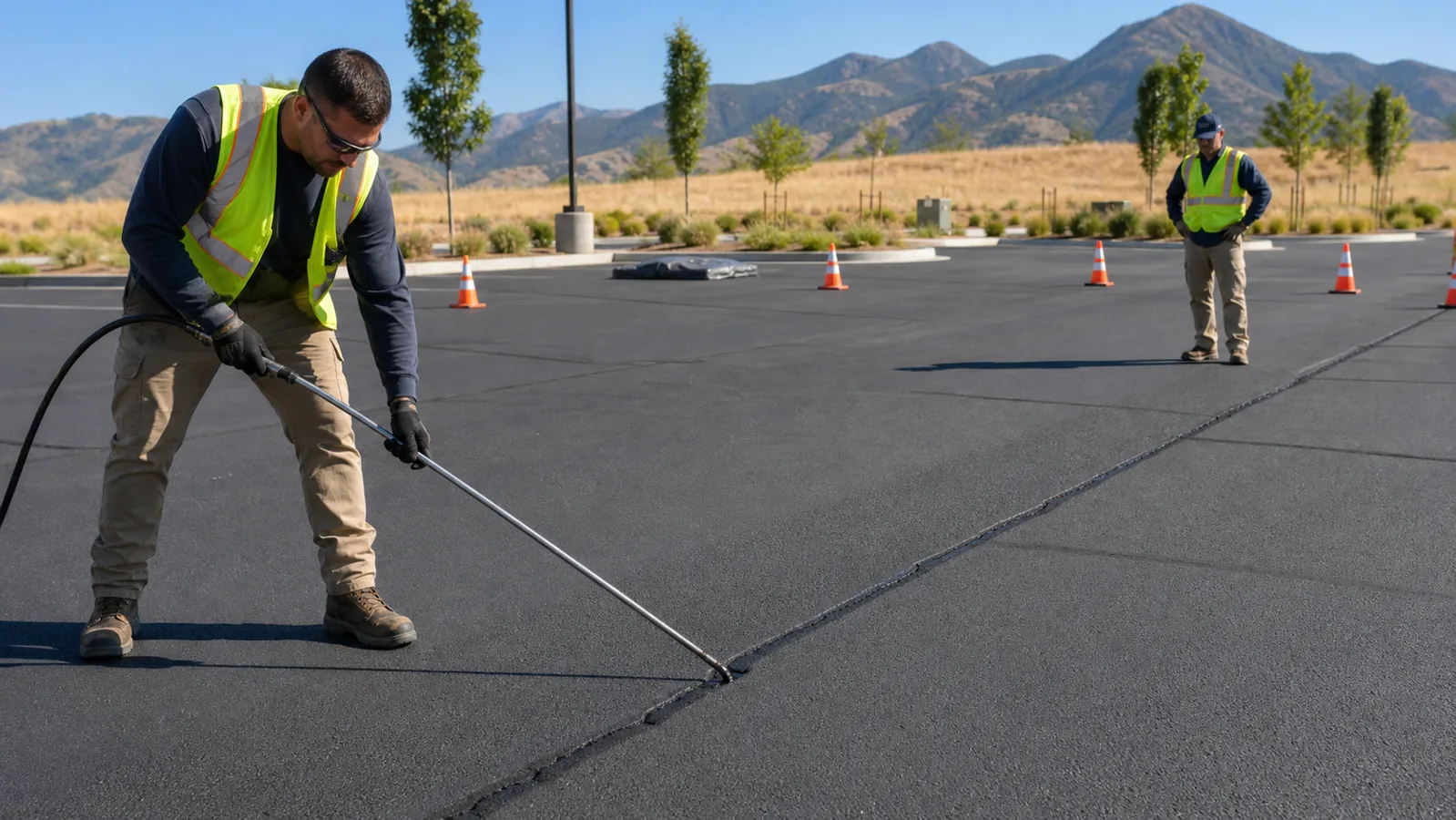
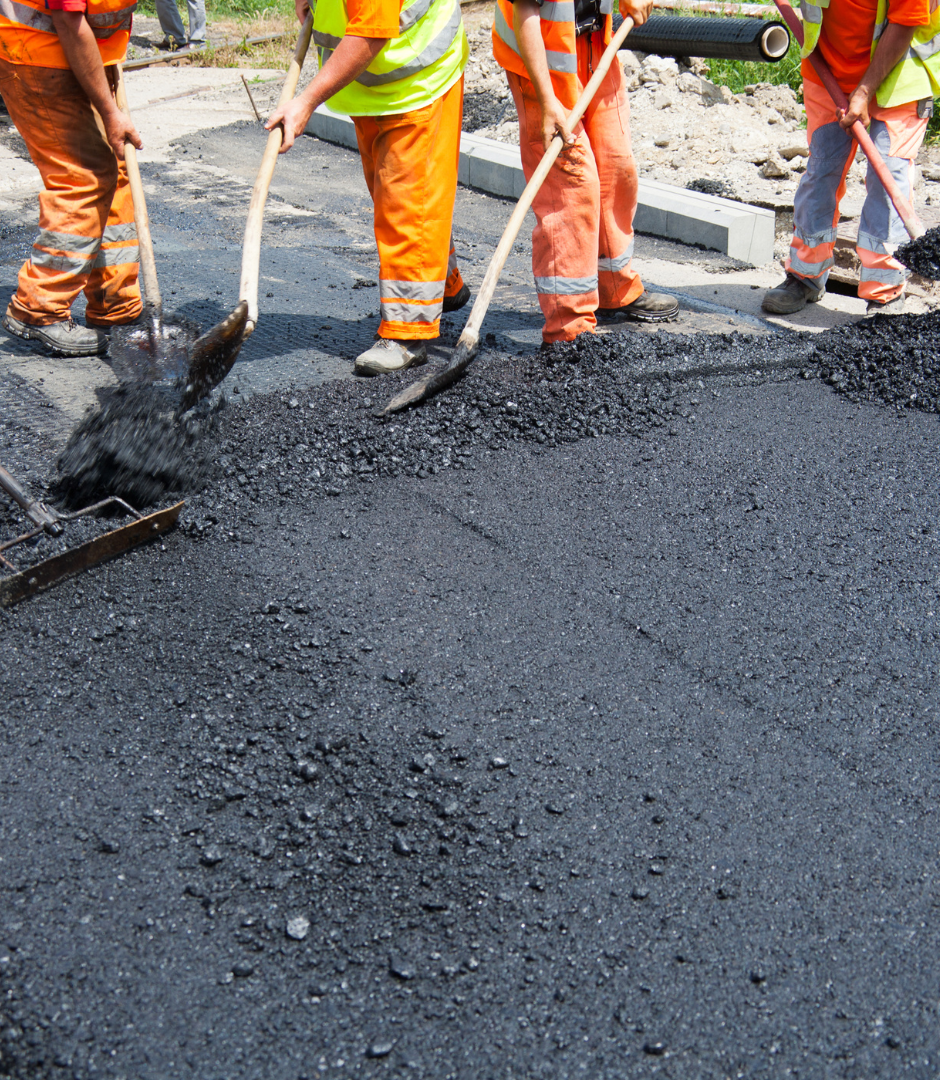
Original AI-assisted illustration of representative dust-free crack preparation. It is not a photograph of an 801 Asphalt project.
5. Protect edges, inlets, and adjacent work
Mask concrete and hand-cut edges where a clean boundary is needed. Protect storm drains and downhill material paths before application starts. Isolate fresh landscaping, building entrances, utility equipment, and parked vehicles. Plan passes that avoid puddling and keep equipment out of completed areas.
6. Mix and apply the first coat uniformly
Prepare the coating according to manufacturer instructions, including any allowed aggregate, water, or additive limits. Apply at the specified rate rather than diluting to achieve color with inadequate material. A thin coat can wear prematurely; heavy puddles may cure poorly and track. Maintain even texture without flooding cracks or drains.
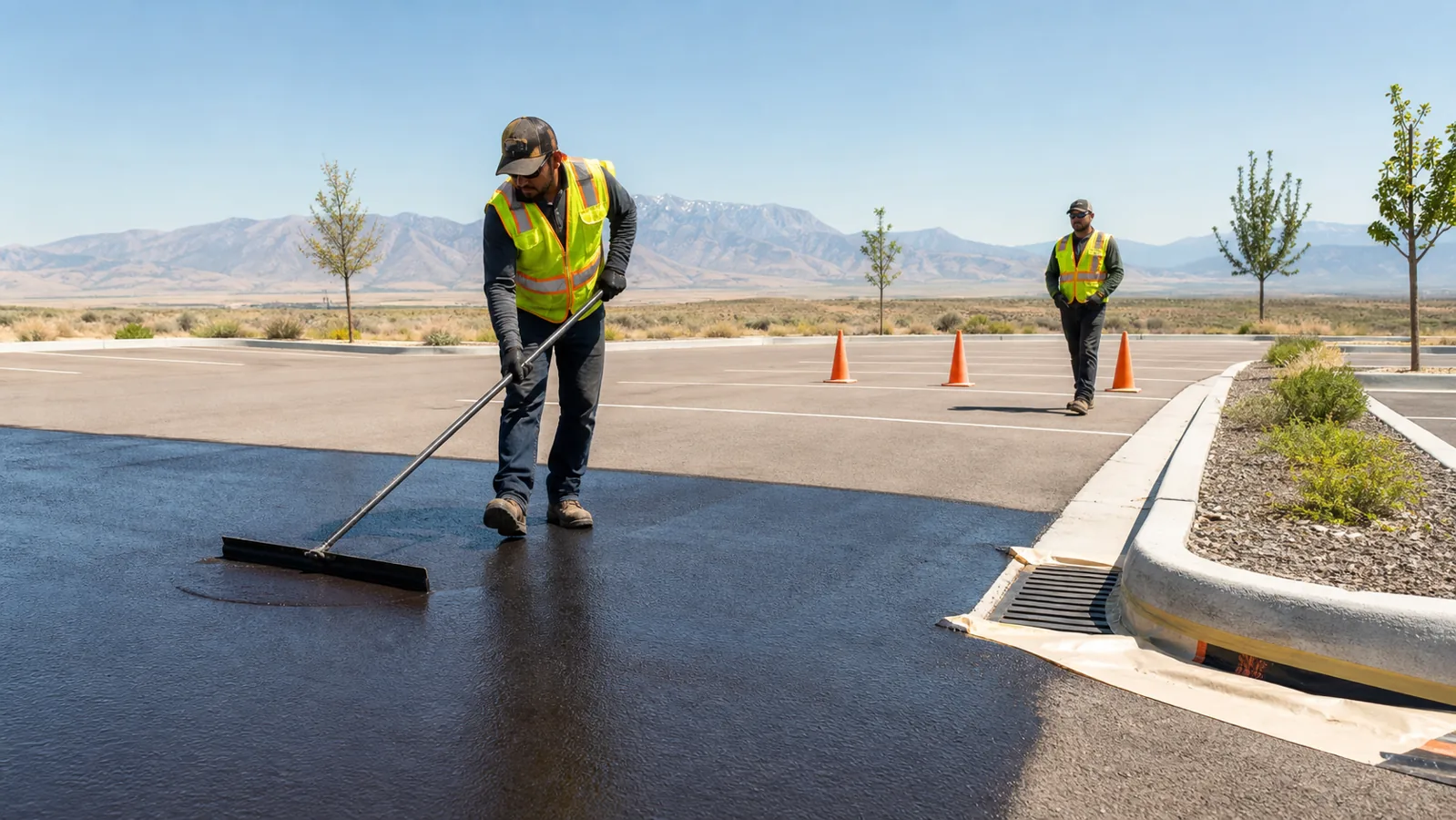
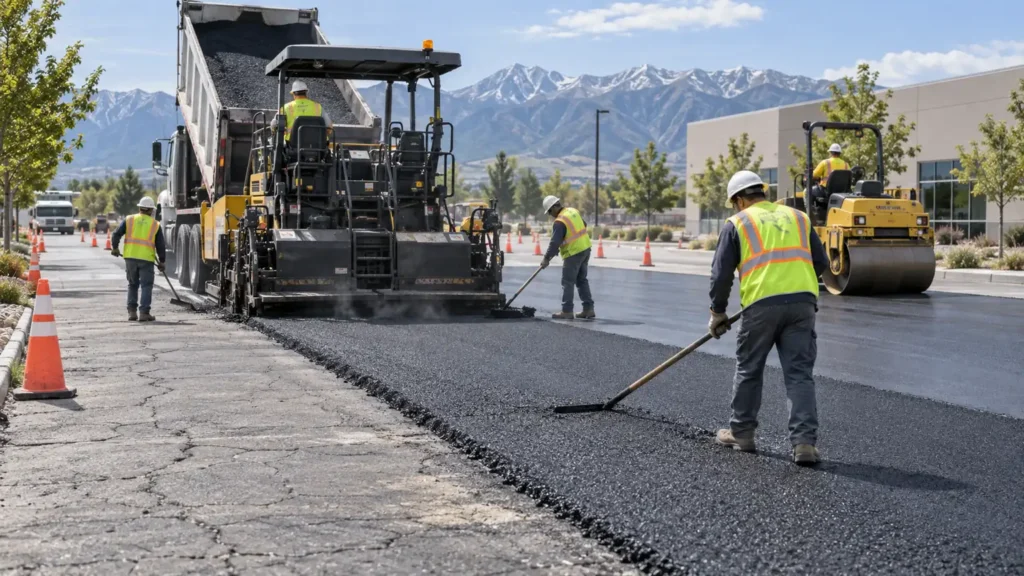
Original AI-assisted illustration of a representative controlled sealcoating operation with inlet protection. It is not a photograph of an 801 Asphalt project.
7. Cure the first coat before the second
A two-coat sealcoat system requires the first coat to cure as specified before the second is applied. The second coat should complement the first application direction when the selected system calls for it, helping achieve consistent coverage through surface texture. Entrances and turns may deserve separate wear planning, but extra material cannot compensate for poor cleaning or structural failure.
8. Inspect coverage and protected areas
Check thin areas, puddles, streaks, missed edges, tracked material, drain protection, overspray, and incomplete crack work. Document material quantities and weather. A small test area can help where the pavement is unusually porous, heavily oxidized, or coated with an unknown prior product.
9. Cure, restripe, reopen, and document
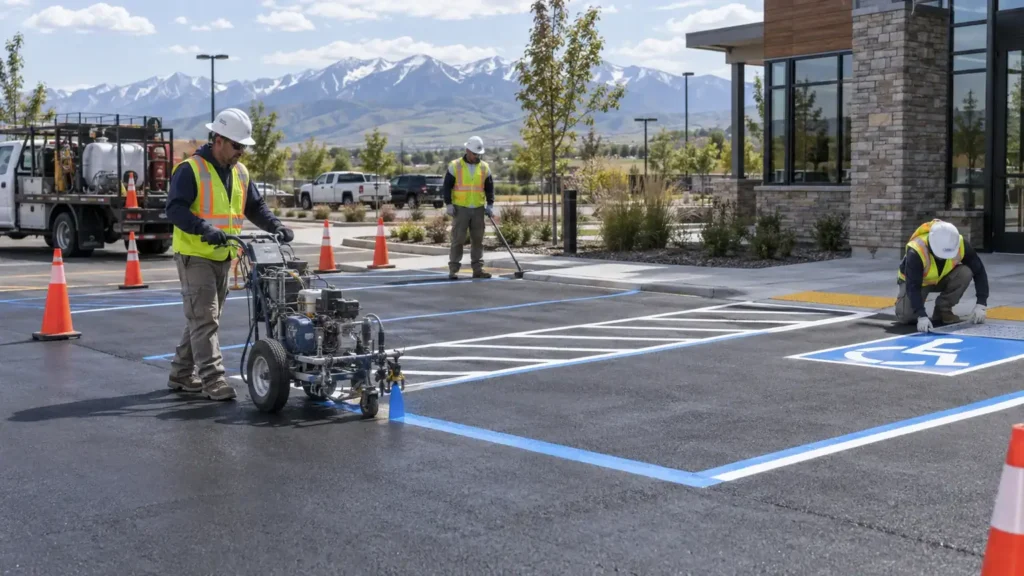
Current Utah guidance often plans 24 to 48 hours before vehicle traffic, depending on product and weather. Pedestrians, striping equipment, passenger cars, heavy trucks, and tight power steering may require different restrictions. Provide site-specific instructions. After adequate cure, restore approved markings. Closeout should record area, crack quantities, coat count, material, phases, weather, reopening, and excluded defects.
2026 sealcoating costs in Eagle Mountain
These current Utah contractor-published examples were checked August 25, 2026. They are budgeting references—not government schedules, independent market averages, or quotes from 801 Asphalt.
| Sealcoating scope | Published Utah planning range | Unit or example | Main cost drivers | Source |
|---|---|---|---|---|
| Commercial sealcoating example | About $0.15–$0.35 | square foot | Area, condition, traffic, preparation, striping | 801 Asphalt sealcoating cost guide |
| Residential driveway example | About $250–$800+ | project | Size, minimum charge, cracking, cleaning | 801 Asphalt sealcoating cost guide |
| Salt Lake-area unit guide | About $0.15–$0.35 | square foot | Lot size, coat count, surface condition | 801 Asphalt sealcoating cost guide |
| Wasatch Front planning range | About $0.20–$0.50 | square foot | Small-job minimum, cleaning, cracks, access | 801 Asphalt sealcoating cost guide |
| Crack sealing often completed first | About $1–$3 | linear foot | Width, cleaning, routing, quantity, mobilization | 801 Asphalt crack sealing cost guide |
Small driveways can cost more per square foot because crew, equipment, travel, and preparation create a minimum charge. Larger HOA or commercial areas may have lower unit cost but need multiple phases, dust control, inlet protection, resident coordination, and later restriping. Heavy crack treatment can cost more than the coating and may change whether sealcoating is still appropriate.
Three practical Eagle Mountain sealcoating questions
When is pavement too damaged for sealcoating to help?
Sealcoat is no longer the primary answer when pavement moves, loses aggregate broadly, has recurring potholes, holds water because of settlement, or shows connected alligator cracking across large areas. Those symptoms call for repair or rehabilitation analysis. Sound surrounding areas may still be maintained later, but the failed support must not be hidden by a cosmetic treatment.
How long should new asphalt cure before its first sealcoat in Utah?
Many current Utah guides cite six to twelve months as a planning window. It is not an automatic deadline. Mix, installation date, weather, traffic, surface condition, and manufacturer instructions matter. Inspect the pavement before deciding, especially if utility, landscaping, or construction work continued after paving.
What preparation and weather window produce a durable finish?
The surface should be dry, stable, and free of dust and bond-breaking contamination. Repair failed areas and treat eligible cracks first. Follow product limits for temperature, moisture, rain, and curing through both coats and reopening. On an open Eagle Mountain site, control windblown dust and protect runoff paths. Rescheduling for moisture, wind, cold, or nearby construction is a quality decision.
Quality checklist for a sealcoating proposal
Use this checklist when comparing Utah pavement maintenance on Asphalt in Utah:
- Is measured area separated from exclusions and landscaping islands?
- Does the scope identify one coat or two, material system, and application basis?
- Are dust, tracked soil, vegetation, oil spots, and edge preparation included?
- Are crack sealing, pothole repair, and failed-area patching separately quantified?
- Does the contractor identify pavement that should not be coated?
- Are storm drains, concrete, buildings, landscaping, and vehicles protected?
- Are manufacturer weather limits, wind, moisture, and a rain contingency addressed?
- Are resident or tenant phases, deliveries, trash service, and alternate routes assigned?
- Are curing and reopening specific to pedestrians, cars, and heavy vehicles?
- Is restriping included, excluded, or priced from an approved layout?
- Are minimum charges, taxes, mobilization, and change orders clear?
- Does the plan protect the completed work from nearby construction traffic and dust?
Protect sound pavement without hiding failure
Walk the property and mark surface aging, active cracks, settlement, patches, dust sources, oil spots, drains, snow storage, and remaining construction. Separate repair zones from preservation zones. Then compare written proposals with the same area, crack quantities, coat count, phasing, and environmental controls.
Learn about 801 Asphalt's commercial sealcoating service, browse the Eagle Mountain article hub, and read the related guides for new asphalt paving in Eagle Mountain and repairing utility-settlement failures first.
Request a free project assessment or call (801) 277-4258. Ask for measured area, preparation, crack quantities, coat count, cure conditions, and exclusions in writing so competing quotes address equivalent work.
Editorial disclosure
Author: 801 Asphalt Editorial Team
Technical review: Automated source, pricing, link, and claims validation completed August 25, 2026; no unverified local project claim was included.
Published and updated: August 25, 2026
AI assistance: AI assisted with drafting and the two original illustrations. The images are representative scenes, not photographs of 801 Asphalt projects.
Sources and review notes
- Eagle Mountain City Stormwater Department
- Eagle Mountain City 2026 crack-seal project update
- 801 Asphalt sealcoating cost guide
- 801 Asphalt sealcoating cost guide
- 801 Asphalt sealcoating cost guide
- 801 Asphalt crack sealing cost guide
- 801 Asphalt sealcoating service
Sources and prices checked August 25, 2026. Contractor-published figures are market examples, not government schedules, independent averages, an 801 Asphalt price list, or guaranteed quotes. No unverified project-history, ranking, licensing, warranty, lowest-price, or local-experience claim is included.