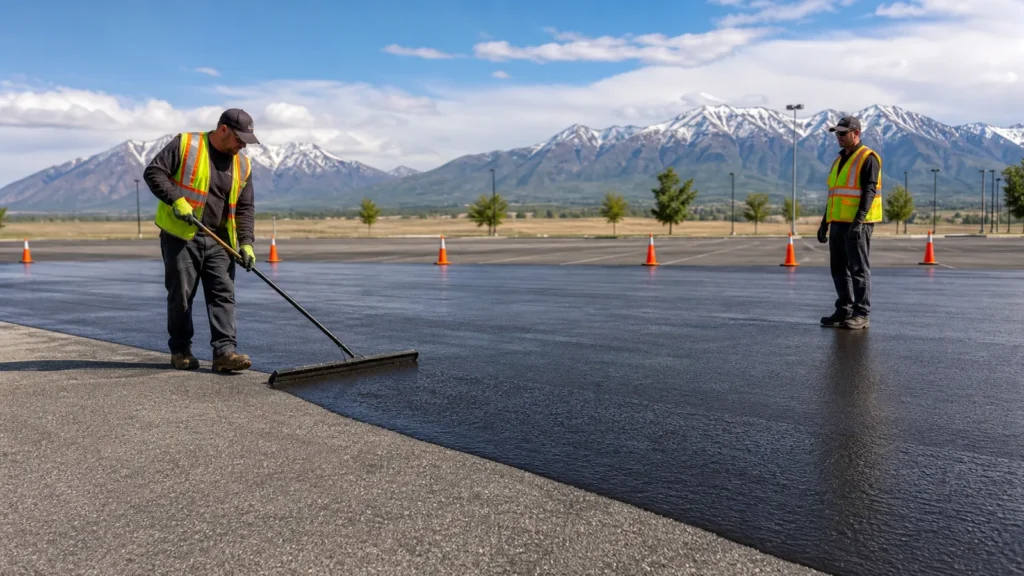
Asphalt sealcoating in Draper, Utah is preventive maintenance for pavement that is still structurally sound. It creates a renewed wearing surface that helps limit oxidation, ultraviolet exposure, water intrusion, and minor chemical staining. It does not rebuild a weak base, correct settlement, fill potholes, or make alligator-cracked pavement whole. The most important decision is therefore not which shade of black to buy; it is whether the pavement is a suitable candidate for coating at all.
Current Utah contractor-published planning examples place sealcoating around $0.15–$0.50 per square foot, with many published Salt Lake-area examples clustered around $0.20–$0.45 per square foot. Crack treatment, cleaning, oil-spot preparation, the number of coats, traffic control, minimum mobilization, and restriping are commonly separate cost drivers. These are budgeting examples rather than independent market averages or an 801 Asphalt price list.
801 Asphalt provides a detailed, scope-matched quote and aims to stay competitive for comparable Utah work. Ask every bidder to put surface preparation, crack work, application rate, coat count, exclusions, curing, and restriping in writing so the proposals can be compared on equal terms.
Quick navigation
- Who sealcoating is best for
- When not to sealcoat
- The high-quality two-coat process
- 2026 Utah budgeting ranges
- Three niche Draper questions
- Proposal quality checklist
Why Draper pavement needs a condition-based plan
Draper includes hillside residential drives, private HOA streets, medical and professional offices, churches, schools, retail centers, multifamily communities, and busy commuter properties. A level office lot and a steep, sun-exposed private drive do not age in exactly the same way. Grade, drainage, irrigation, snow storage, traffic, turning movements, shade, previous coatings, and the condition of the aggregate base all affect what maintenance can accomplish.
Strong sun contributes to asphalt oxidation, which gradually leaves pavement gray, brittle, and more likely to develop small cracks. Water entering those openings can reach the supporting layers and become more damaging through Utah freeze-thaw cycles. Sealcoat helps protect the top surface and can slow moisture entry through fine surface texture, but routed or working cracks generally need a compatible crack-treatment step before coating. Water moving through failed pavement or from an unresolved drainage source cannot be solved by painting the surface.
Draper City's current Storm Water Management Program treats runoff from impervious surfaces such as driveways and parking lots as part of the local stormwater system. For a private project, the practical implication is straightforward: keep liquid coating, wash water, debris, and preparation residue away from inlets, curb flow lines, soil, and landscaped areas. A crew should plan material handling and drain protection before application begins, especially on sloped sites where an unexpected release can travel quickly.
Who is sealcoating best for in Draper?
Proper commercial sealcoating or driveway sealcoating is usually best for asphalt that is stable, reasonably smooth, and beginning to show surface aging rather than structural distress. Suitable properties often include:
- Retail and medical-office lots that need phased parking lot maintenance while preserving customer and accessible routes.
- HOAs and multifamily communities with serviceable drive aisles that can be divided into manageable closure zones.
- Churches, schools, and recreation properties that can schedule curing during lower-use periods.
- Warehouses and light-industrial sites where passenger-vehicle areas are sound and heavy-load zones can be evaluated separately.
- Homeowners whose driveways are faded and mildly weathered but do not move, rut, crumble, or hold water.
- Property managers using crack treatment, sealcoat, and restriping as coordinated parts of a multiyear maintenance plan.
The coating should match the existing pavement, traffic, and intended use. Areas exposed to frequent fuel spills, standing water, metal outriggers, concentrated dumpster loads, or aggressive turning may need additional repair, a different pavement design, or different maintenance expectations. A contractor should not promise that the appearance of a newly coated lot proves the structure below it is sound.
When sealcoating is the wrong treatment
Sealcoating should be postponed or rejected when the surface has widespread alligator cracking, potholes, pumping, deep ruts, loose aggregate, major settlement, unstable edges, or recurring soft spots. Those symptoms often point to failure below the wear surface. Coating over them may improve color temporarily while the cracks and movement continue beneath it.
It is also unsuitable when asphalt is too new to release its initial oils, when a previous coating is peeling or incompatible, when the surface is contaminated, or when weather will not allow proper curing. Current Utah guides commonly suggest letting new asphalt cure for its first season—roughly six to twelve months—before the first sealcoat. The actual timing should follow pavement condition and the coating manufacturer's written requirements rather than a calendar alone.
Do not use sealcoat to correct grade, ponding, a buried utility failure, a broken drainage structure, or an elevation conflict at a garage, sidewalk, or public approach. A crack filler under sealcoat is not a structural bridge. Failed areas should be repaired to sound material before a protective system is considered. When deterioration covers most of a site, an engineered overlay or reconstruction comparison may be more economical than repeatedly coating and patching.
A high-quality two-coat sealcoating procedure
1. Inspect, measure, and define the objective
Map pavement limits, traffic patterns, cracks, patches, oil spots, drains, utility lids, concrete edges, landscaping, low points, and areas that move or hold water. Measure the actual square footage and distinguish coated area from islands, sidewalks, buildings, or exclusions. The scope should say whether the goal is preservation, appearance, preparation for restriping, or a combination.
2. Select a viable weather and operations window
Sealcoat needs dry pavement and enough warm, dry time to cure. Utah contractor guidance commonly uses daytime temperatures around 50°F or higher and no rain in the near forecast as minimum planning conditions, but the product data sheet controls. Cool nights, shade, humidity, windblown debris, steep grades, and late-season work can change curing. A credible schedule includes a weather contingency and does not force application onto damp pavement simply to preserve a date.
For active properties, establish closure phases, alternate access, deliveries, trash service, resident notices, emergency routes, and accessible paths. Traffic control should prevent vehicles from crossing wet material or trapping workers inside an active lane.
3. Clean the pavement thoroughly
Remove loose aggregate, dirt, vegetation, leaves, gravel, and dust with methods appropriate for the property. Treat oil spots and other bond-breaking contamination rather than coating blindly over them. Scraping, mechanical sweeping, blowing, and localized cleaning should leave a dry surface without sending residue or wash water into storm drains. Protect concrete, doors, walls, curbs, landscaping, vehicles, and utility components from splatter.
4. Complete repairs and crack treatment first
Repair potholes and failed areas before sealcoating. Clean and treat eligible cracks with the specified material, allowing compatible cure time before the first coat. Not every crack receives the same treatment: hairline surface checks, moving transverse cracks, open joints, and connected structural cracking are different conditions. The written proposal should state which cracks are included, the measured unit, and which defects need repair instead.
5. Prepare edges, drains, and application lanes
Mask or hand-cut edges where black coating meets concrete or other finished surfaces. Identify drain inlets and downhill escape paths; establish protection and keep application away from places where liquid material could enter the storm system. Lay out manageable passes that avoid puddling, missed areas, abrupt stop marks, and equipment conflicts.
6. Mix and apply the first coat uniformly
The coating system should be mixed and applied according to the manufacturer's requirements, including any approved aggregate, water, or additive limits. Application rate matters more than a vague promise to “spray it black.” Excessively thin material may wear quickly, while heavy puddles can cure poorly and track. The first coat should cover the prepared pavement uniformly without burying debris, flooding cracks, or contaminating adjacent surfaces.
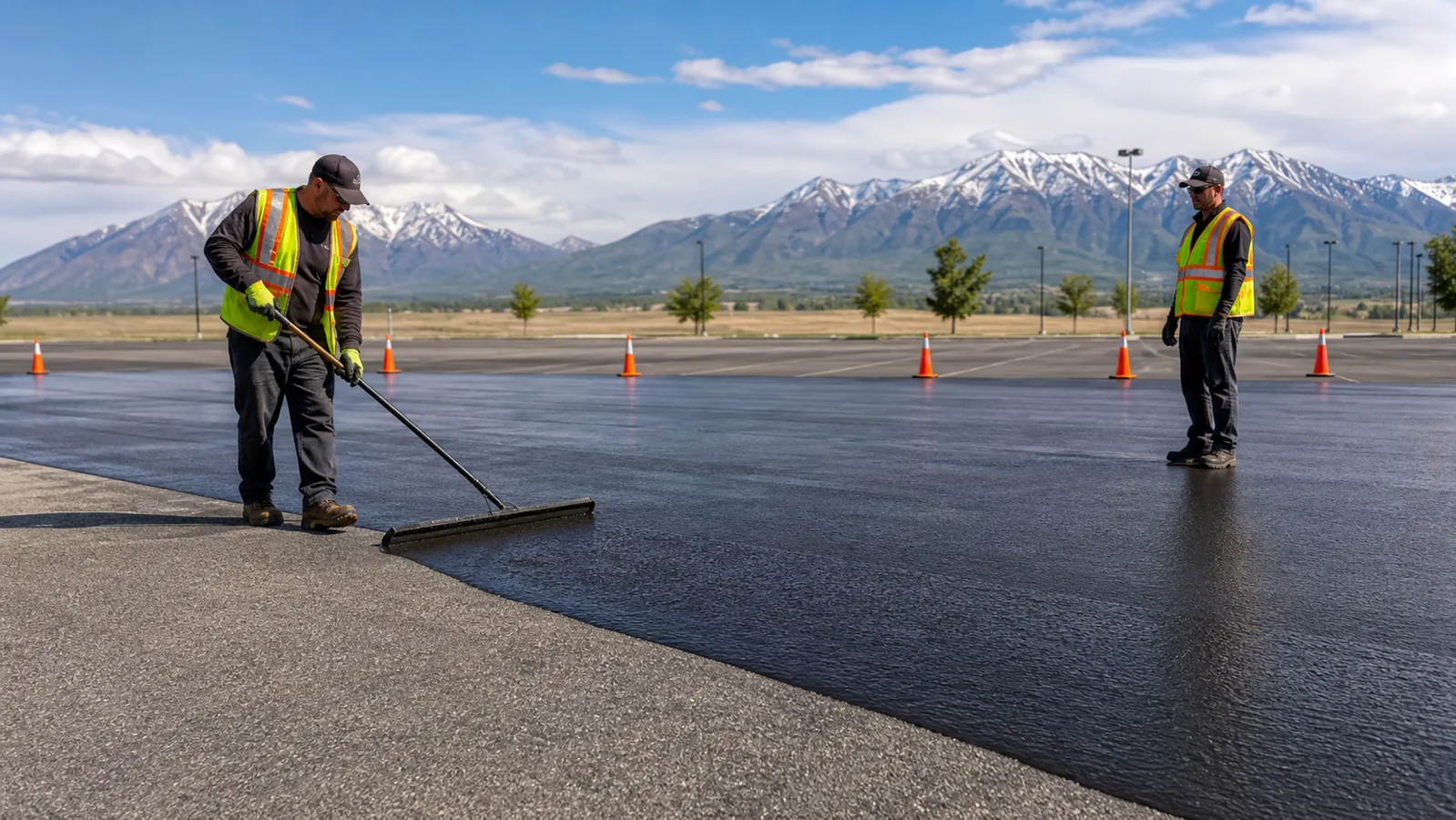
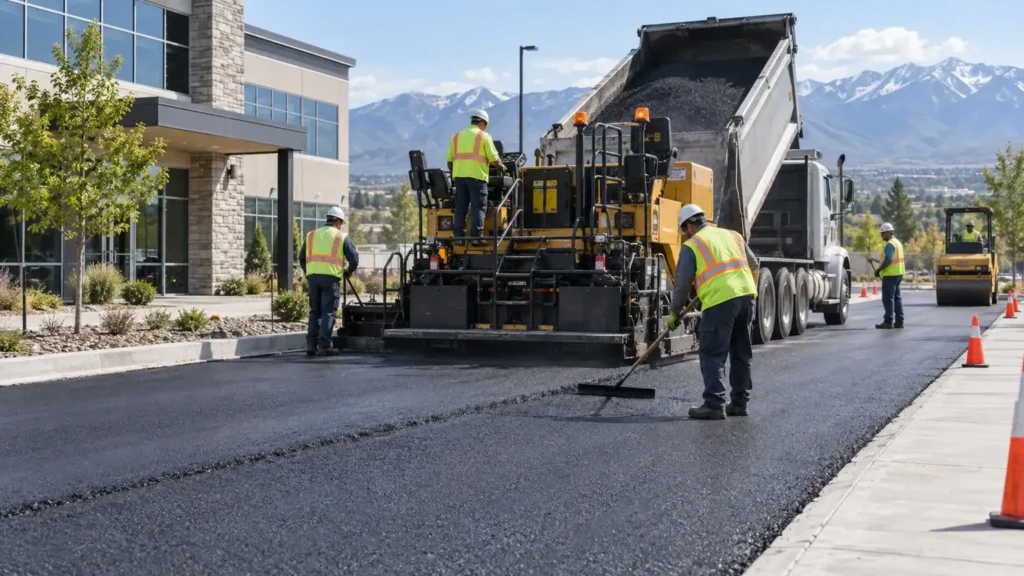
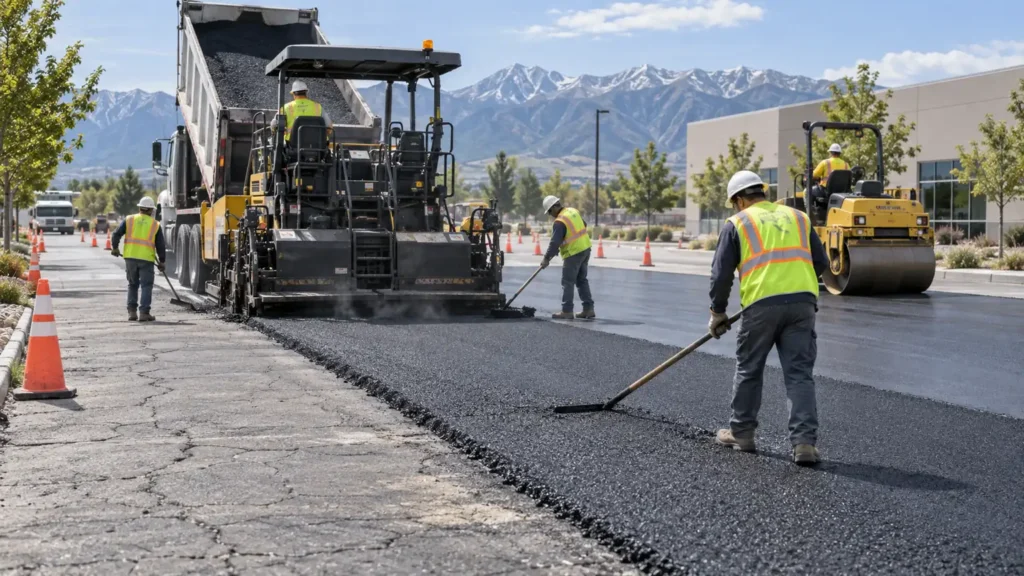
Original AI-assisted illustration of a representative controlled sealcoating operation. It is not a photograph of an 801 Asphalt project.
7. Allow the first coat to cure before the second
A two-coat sealcoat system is not two wet passes stacked together. The first coat needs the product-specified curing period before the next coat is applied. The second coat should cross or otherwise complement the first application direction when the selected system calls for it, helping produce uniform coverage in the pavement texture. High-wear entrances, turns, and drive lanes may deserve separate discussion, but extra material is not a substitute for proper preparation.
8. Inspect coverage, edges, texture, and protected areas
Quality control includes checking for thin areas, puddles, streaks, missed edges, tracked material, contaminated drains, overspray, and incomplete crack work. Conditions and application quantities should be documented. A representative test area can be useful when the surface is unusually porous, has an unknown prior coating, or raises compatibility concerns.
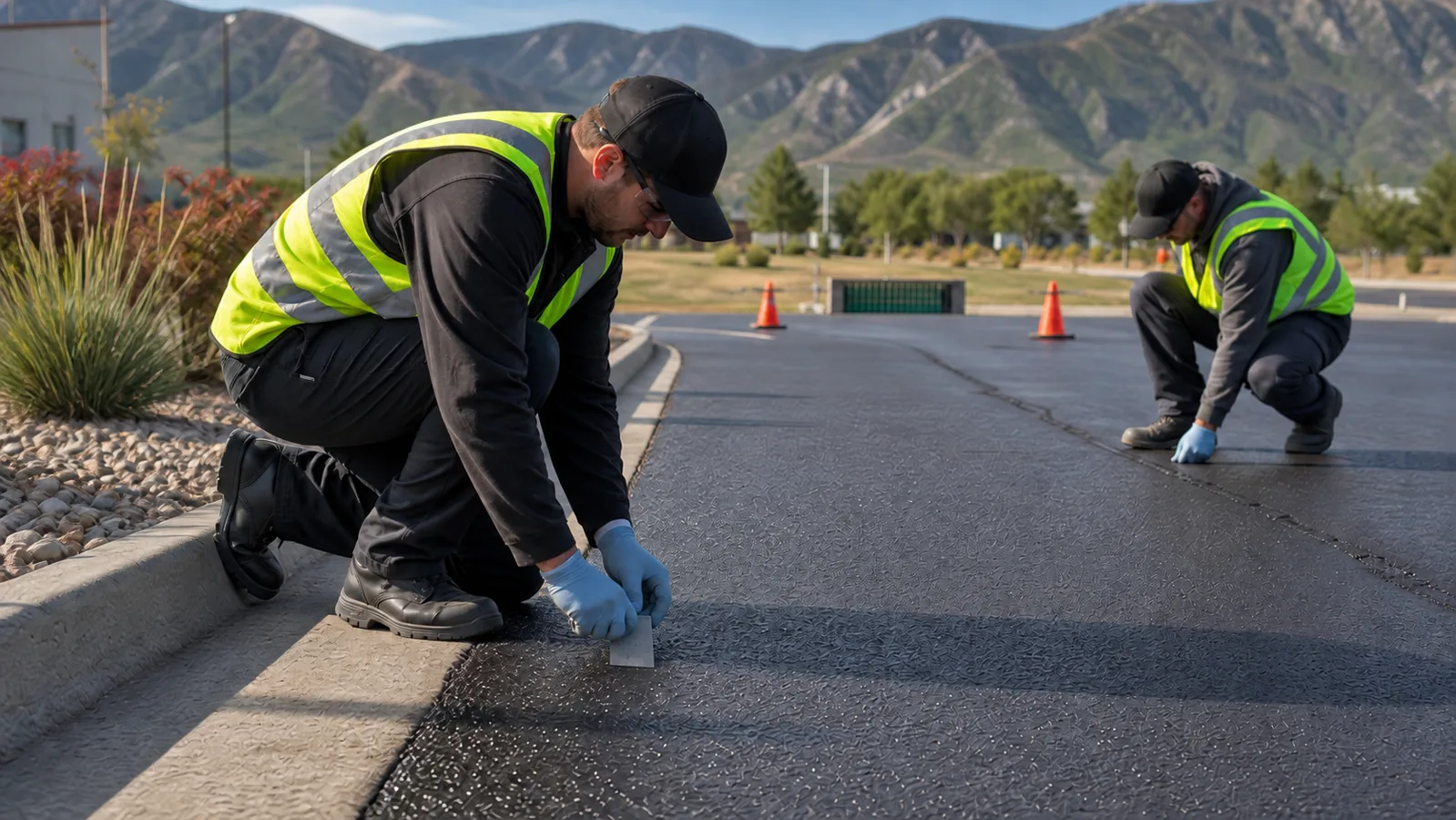
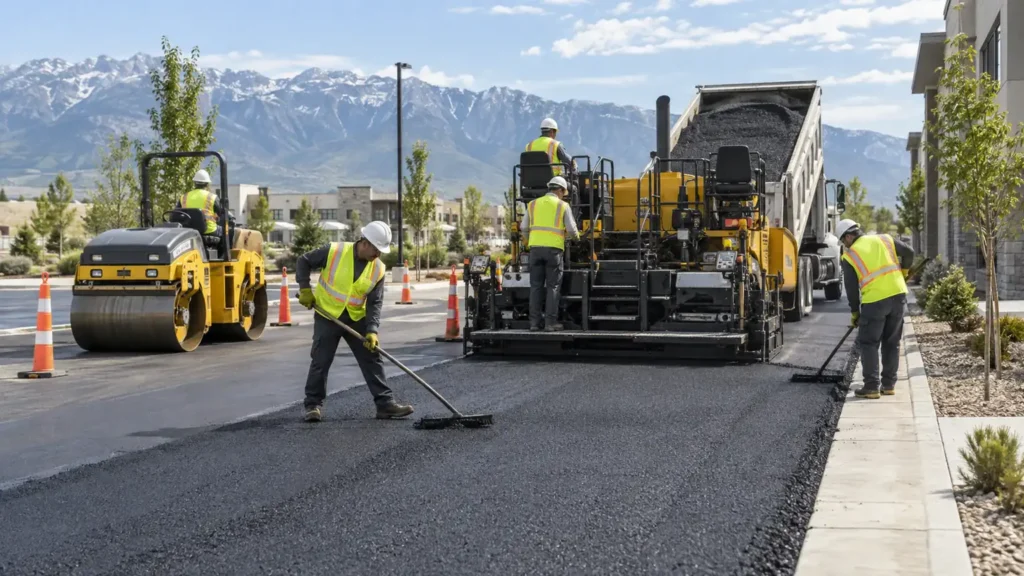
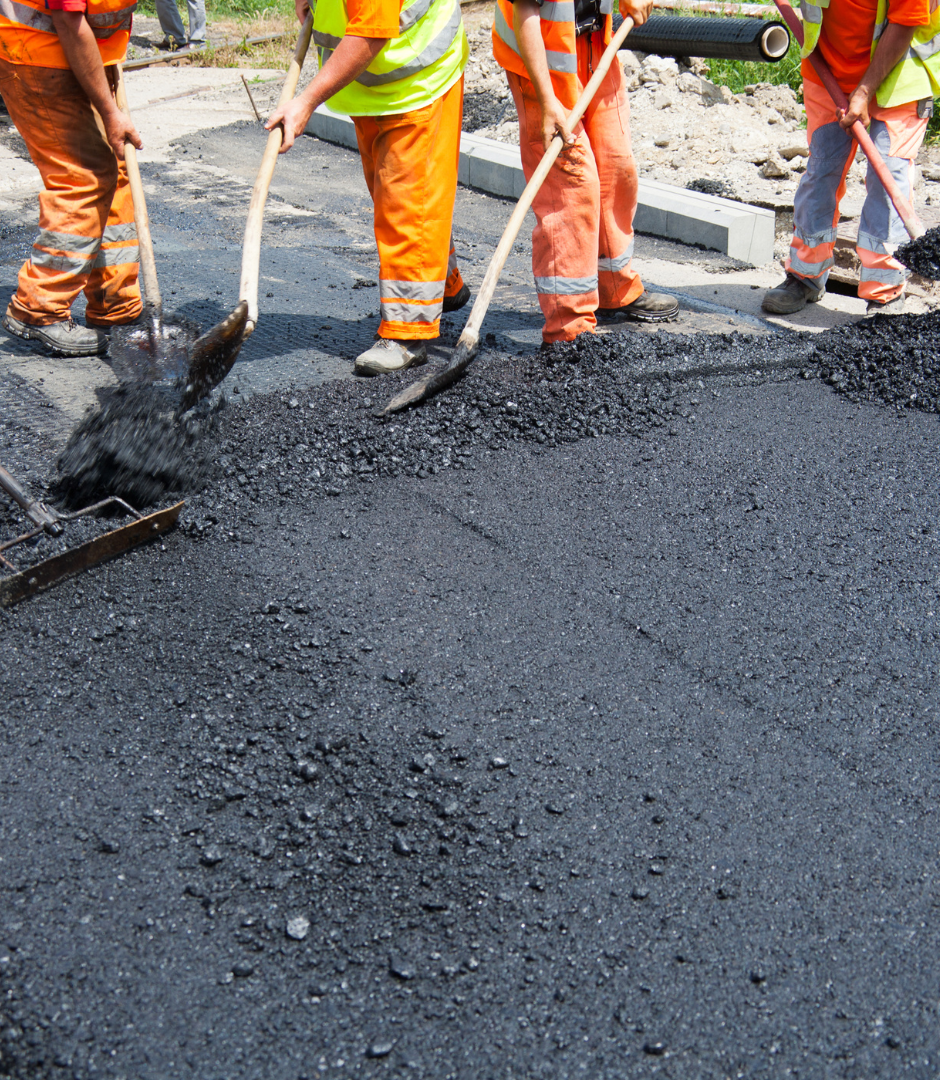
Original AI-assisted illustration of representative coverage and crack-treatment inspection. It is not a photograph of an 801 Asphalt project.
9. Cure, restripe, reopen, and document
Utah contractor guidance often plans 24 to 48 hours before vehicle traffic, depending on weather and product conditions. Walking, striping, passenger vehicles, heavy trucks, tight power steering, and static loads may have different restrictions. The contractor should provide site-specific reopening instructions rather than a generic promise.
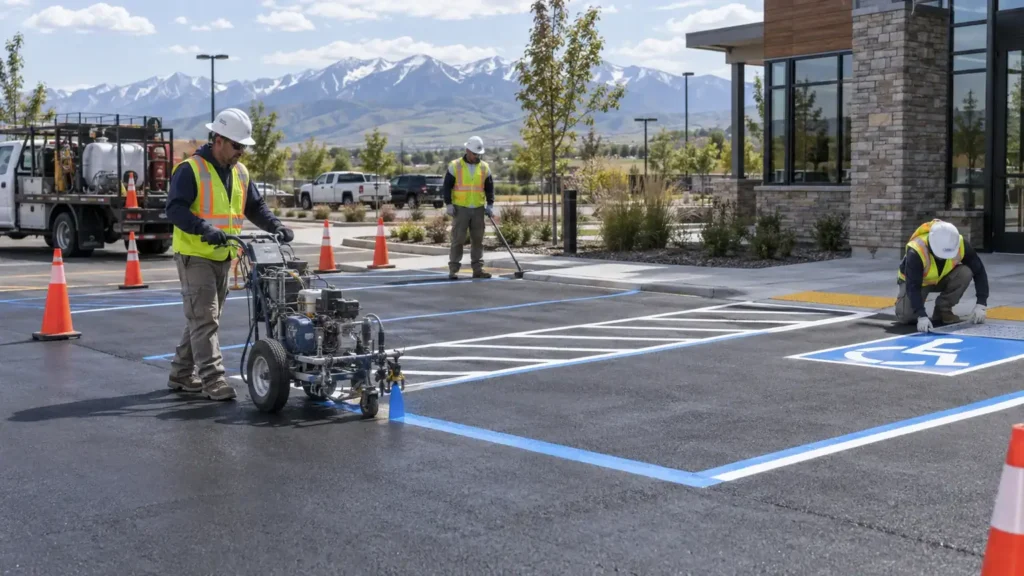
After the surface is ready, restore required pavement markings, accessible stalls, fire lanes, arrows, curbs, and other markings from an approved layout. Closeout should record the coated area, crack quantities, coat count, material system, weather, phases, cure instructions, and any defects excluded because they require repair.
2026 sealcoating costs in Draper
These current contractor-published Utah examples were checked August 25, 2026. They are planning references—not government price schedules, guaranteed market averages, or quotes from 801 Asphalt.
| Scope | Published Utah planning range | Unit or example | Important cost drivers | Source |
|---|---|---|---|---|
| Salt Lake-area sealcoating service | About $0.20–$0.45 | square foot | Area, condition, preparation, crack treatment | 801 Asphalt sealcoating cost guide |
| Salt Lake 2026 cost article | About $0.15–$0.35 | square foot | Lot size, surface condition, number of coats, prep | 801 Asphalt sealcoating cost guide |
| Wasatch Front planning range | About $0.20–$0.50 | square foot | Small-job minimum, cleaning, crack work, traffic | 801 Asphalt sealcoating cost guide |
| Example 700-square-foot driveway | About $140–$350 | planning total | Based only on the published $0.20–$0.50 unit range | 801 Asphalt paving cost guide |
| Crack sealing often completed first | About $1–$3 | linear foot | Crack width, cleaning, routing, quantity, mobilization | 801 Asphalt crack sealing cost guide |
Small driveways can cost more per square foot because equipment, crew, preparation, and travel create a minimum mobilization cost. Large open lots may fall lower per unit but require phasing, traffic control, drain protection, sweeping, and later striping. Steep grades or irregular islands increase handwork. Heavy cracking can make preparation more expensive than coating itself and may change whether the project remains a sensible sealcoat candidate.
Compare proposals by measured square footage, coat count, expected application rate, crack-treatment quantity, cleaning, oil-spot treatment, edge work, closures, restriping, and taxes. If one bidder includes two coats and 600 feet of crack treatment while another lists only “seal lot,” the totals are not comparable.
Three practical Draper sealcoating questions
When is pavement too damaged for sealcoating to help?
It is generally too damaged when the surface moves under traffic, loses aggregate extensively, has recurring potholes, holds water because of settlement, or shows connected alligator cracking across broad areas. Those signs call for repair or structural rehabilitation analysis. Sealcoat may still be used later on sound areas, but it should not be sold as the cure for failed support.
How long should new asphalt cure before its first sealcoat in Utah?
Many current Utah guides suggest six to twelve months, allowing the new mat's initial oils to release. That is a planning window, not an automatic deadline. Surface condition, weather, mix, traffic, and the selected manufacturer's instructions matter. Sealing too early can interfere with curing; waiting until the surface is badly oxidized misses the preventive-maintenance opportunity.
What preparation and weather window produce a durable finish?
The pavement should be dry, clean, stable, and free of bond-breaking contamination. Eligible cracks and failed areas need treatment before coating. The forecast must satisfy the product's temperature, rain, humidity, and cure requirements through both coats and reopening. On a Draper hillside property, drain protection and downhill material control deserve explicit planning. If rain, cold, or site operations make that window unrealistic, rescheduling is a quality decision.
Quality checklist for a sealcoating proposal
Use this list when comparing Utah pavement maintenance work involving Asphalt in Utah:
- Is the measured sealcoat area written separately from exclusions?
- Does the scope identify one coat or two, the material system, and the intended application rate?
- Are cleaning, vegetation removal, oil-spot treatment, and edge preparation included?
- Are crack sealing, pothole repair, failed-area patching, and drainage corrections separated by quantity?
- Does the contractor identify pavement that should not be coated?
- Are drains, concrete, buildings, landscaping, and vehicles protected?
- Does the plan address steep grades and material migration?
- Are manufacturer weather limits and a rain contingency acknowledged?
- Are closure phases, tenant notices, deliveries, trash pickup, and accessible routes assigned?
- Are cure and reopening instructions specific to pedestrian, car, and heavy-vehicle use?
- Is restriping included, excluded, or priced as an option from an approved layout?
- Does the written quote explain minimum charges, taxes, traffic control, and change orders?
Build the maintenance plan around pavement condition
Begin with a walk-through rather than a coat-count decision. Note gray surface areas, active cracks, patches, oil spots, ponding, snow-storage zones, heavy-turning lanes, drains, and places where the pavement moves. Separate preservation candidates from defects needing repair. Then request scope-matched proposals and compare what each one actually includes.
Learn about 801 Asphalt's commercial asphalt sealcoating service, browse the Draper article hub, and read the related guides to asphalt paving in Draper and asphalt repair in Draper.
Request a free project assessment or call (801) 277-4258. Ask for measured quantities, preparation, coat count, cure conditions, and exclusions in writing so you can compare equivalent work.
Editorial disclosure
Author: 801 Asphalt Editorial Team
Technical review: Automated source, pricing, link, and claims validation completed August 25, 2026; no unverified local project claim was included.
Published and updated: August 25, 2026
AI assistance: AI assisted with drafting and the two original illustrations. The images are representative scenes, not photographs of 801 Asphalt projects.
Sources and review notes
- Draper City Storm Water Management Program 2025–2026
- 801 Asphalt commercial sealcoating service
- 801 Asphalt sealcoating cost guide
- 801 Asphalt sealcoating cost guide
- 801 Asphalt sealcoating cost guide
- 801 Asphalt paving cost guide
- 801 Asphalt crack sealing cost guide
Sources and prices checked August 25, 2026. Contractor-published figures are market examples, not government schedules, independent averages, an 801 Asphalt price list, or guaranteed quotes. No unverified project-history, ranking, licensing, warranty, lowest-price, or local-experience claim is included.